Think Forward.

Aziz Daouda

1720878
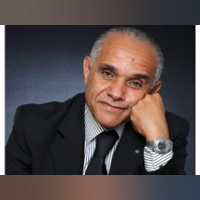
Directeur Technique et du Développement de la Confédération Africaine d'Athlétisme. Passionné du Maroc, passionné d'Afrique. Concerné par ce qui se passe, formulant mon point de vue quand j'en ai un. Humaniste, j'essaye de l'être, humain je veux l'être. Mon histoire est intimement liée à l'athlétisme marocain et mondial. J'ai eu le privilège de participer à la gloire de mon pays .
8100
33.0

AFCON 2025: Why Morocco Should Win Its Quarterfinal Against Cameroon... 120

The quarterfinal of the 2025 Africa Cup of Nations between Morocco and Cameroon, scheduled for January 9, 2026, at Prince Moulay Abdellah Stadium in Rabat, promises to be the hottest clash of the quarters. A matchup with the taste of revenge from another AFCON, the 1988 edition. But we're in 2025, and a lot of water has flowed under the bridges since then. As unbeaten hosts, the Atlas Lions display total mastery with 7 goals scored for just 1 conceded on penalty in four matches, outpacing the Indomitable Lions and their 6 goals for 3 conceded. This numerical superiority, fueled by Brahim Díaz's spark, El Kaabi's indomitability, a relentless defensive midfielder, a rugged defense, and home crowd advantage, positions Morocco as the clear favorite in an intense technical-tactical duel. Even if not deemed flawless by some, Morocco's run has been effective despite losing two key pieces: Saïss and, even more, playmaker Azzedine Ounahi. The Atlas Lions topped Group A with 7 points: a clinical 2-0 win over Comoros, an offensive festival 3-0 against Zambia, and a strategically understandable 1-1 draw against Mali, proving rare versatility. In the round of 16, a controlled 1-0 against Tanzania confirmed their solidity, with zero goals conceded in three of their four outings. This iron defense, led by trio Yassine Bounou, Nayef Aguerd, and Mazraoui, backed by tireless El Aynaoui, yielded only once on penalty to Mali. Overall, a +6 goal difference evoking the discipline of a team chasing continental glory at home. And Hakimi was only just returning for the last match played. This time, for the quarters, they'll face a solid but vulnerable Cameroon, marked by the team's youth and disjointed play in many phases so far. However, their margin for improvement is huge, and the metamorphosis and step-up could precisely happen here in the quarterfinal. The Indomitable Lions snatched first place in Group F with 7 points too: a precious 1-0 against Gabon, a hard-fought 1-1 against Côte d'Ivoire, and a laborious 2-1 over Mozambique. The two goals conceded in the group stage already highlighted collective defensive failings. Their quarterfinal qualification with a 2-1 over South Africa in the round of 16 showed character but also flaws: three goals conceded in total, including one from an individual error against the Bafana Bafana. Less sharp up front with only 6 goals, they rely on opportunistic realism, far from Moroccan fluidity. Morocco, meanwhile, benefits from Brahim Díaz, a maestro in the spotlight. He's likely living his golden age in the AFCON: 4 goals in 4 matches, a historic record for a Moroccan in a single finals, including a gem in the 64th against Tanzania. He's clearly responding to his club coach who seems unsure how to harness his genius. The first Lion to score in every consecutive match, the Madrid man excels in tight spaces, with Ayoub El Kaabi (3 goals) as his faithful, cutting lieutenant. Facing a solid Cameroonian defense with imperial but sometimes hesitant André Onana, this individual threat—even if small in stature: 4 shots on target per match on average—could tip a locked scenario, as in the round of 16 where his runs unsettled the Taifa Stars. Overall technical mastery and ball dominance also tilt toward Morocco, who crush the collective stats: 2,184 successful passes, an absolute record, 89% accuracy, and 71% possession against Tanzania—an ocean of control. Achraf Hakimi, back with a bang and an assist, will surely animate a hellish right flank, while El Khanouss, just settling in, dictates the midfield tempo despite Azzedine Ounahi's absence. In contrast, Cameroon lags at 77% accuracy and 43% average possession, struggling in quick transitions with Frank Zambo Anguissa as their sole pivot. This technical asymmetry promises a prolonged siege by the Atlas Lions on the opposing box. With Amrabat as sentinel to handle Anguissa, it's game over. Other facts and assets also favor the Atlas Lions: psychological and historical factors could be decisive. Euphoric hosts, the Moroccans are riding a 23-match unbeaten streak and a fired-up crowd in Rabat, where the atmosphere will echo the 2022 World Cup. The overall head-to-head favors Cameroon with 6 wins, 5 draws, 2 losses in 13 duels, untouchable in AFCON with 2 wins and 1 draw, but the last two clashes tilt to Morocco: a 1-0 in 2019 AFCON qualifiers and a humiliating 4-0 at the 2020 CHAN. This is thus a generational arm-wrestle for sure, but Morocco's freshness with fewer minutes played and perfect adaptation to the climate outweighs the Indomitable Lions' experience. These combined elements forge an ideal scenario for a conquering Morocco chasing a second star, to be decided at the final whistle at Moulay Abdellah complex, Friday around 10 PM. While a surprise elimination is always possible in a tournament as tight as the AFCON, Morocco holds today's strongest statistical signals for victory: ✔ Best overall offensive output ✔ Only one team that scored against them vs. two for Cameroon ✔ Collective mastery of ball and tempo ✔ Two scorers in top form (Díaz and El Kaabi) ✔ Home turf and fan support advantage These elements form an objective basis for arguing a Moroccan success in this quarterfinal.

Venezuela after Maduro: Democratic Transition or New Imbroglio? 130

Whether one agrees with Donald Trump or not, the fall of Nicolás Maduro marks a historic turning point in Venezuelan history and, more broadly, in the history of the region and the world. After more than a decade of authoritarian governance, economic collapse, and mass exile, Maduro's capture appears both as a relief for part of the population and as a shock to the international legal order. The arrest of the president, or the suspect, depending on one's perspective, who was exfiltrated and then indicted in the USA for narcotrafficking and corruption, thus concentrates hopes for political transition and accusations of imperialist interference. Venezuela, despite possessing the world's largest proven oil reserves, has experienced a rapid degradation of its democratic institutions since the beginnings of the Bolivarian Revolution. First under Hugo Chávez, then under Maduro, the country has seen its economy crumble, with recurrent hyperinflation, collapse of the national currency, and widespread impoverishment. From 2014 onward, the crisis turned into a full-blown humanitarian catastrophe: shortages of medicines, collapse of public services, and endemic insecurity. The human dimension of this crisis is equally dramatic: nearly eight million Venezuelans have left the country over the past decade, fleeing hunger, repression, and lack of prospects. Internally, political opponents have been marginalized, judicial independence undermined, and fundamental freedoms curtailed, to the point that many international organizations describe it as an authoritarian regime or hybrid dictatorship. Chavismo has morphed into a corrupt oligarchy, capturing oil rents for the benefit of a politico-military elite and criminal networks, a model far from unique. The Trump administration, back in power with an uncompromising discourse against regimes labeled "socialist" or "narco-states," has gradually hardened its strategy toward Caracas. For several years, Washington has multiplied pressures: heavy economic sanctions targeting the national oil company, financial restrictions, naval blockade, and designation of Maduro's inner circle as a transnational criminal organization. Officially, these measures aimed to choke the regime's resources, particularly oil revenues and narcotrafficking flows. In January 2026, this maximum pressure strategy reaches its peak with an operation of exceptional magnitude. Targeted strikes and a special operation coordinated by the United States Southern Command result in Maduro's capture in his bed, followed by his transfer out of Venezuelan territory. President Trump himself publicly announces that Maduro and his wife have been arrested and will be tried in the USA for narcotrafficking, corruption, and participation in an alleged cartel designated as a terrorist organization. In the aftermath, Trump promises that the United States will guarantee a "safe and orderly" political transition for Venezuela, even going so far as to mention the possibility of "managing" the country until credible elections are organized. This military intervention immediately triggered a cascade of contrasting reactions, revealing deep polarization both domestically and internationally. For its supporters, the operation is a form of liberation: it ends a regime accused of repressing its people, rigging elections, and diverting the country's wealth to politico-mafia networks. Part of the Venezuelan opposition, whether in exile or still on the ground, presents Maduro's capture as a historic opportunity to rebuild democratic institutions and revive a bloodless economy. For its detractors, on the other hand, the U.S. intervention constitutes a flagrant violation of Venezuelan sovereignty and international law, particularly the principle of non-use of force enshrined in the UN Charter. Some Latin American and European governments, as well as UN spokespeople, have denounced a unilateral U.S. operation and warned against a dangerous precedent legitimizing similar actions elsewhere in the world. Even within the Venezuelan opposition, some actors fear that the end of internal authoritarianism might open the door to a lasting external tutelage, further exacerbating the divide between pro- and anti-intervention factions. Beyond moral or legal justifications, the geopolitical and energy dimensions are central to understanding the initiative. Venezuela holds considerable but low-quality oil reserves that actors like China and Russia have sought to secure through long-term agreements, massive loans, and equity stakes. This increased presence of rival powers at the gates of the United States runs counter to the old Monroe Doctrine and fuels, on the American side, the perception of a strategic challenge in what Washington considers its "backyard." From this perspective, the intervention cannot be read solely through the prism of human rights or solidarity with the Venezuelan people. Washington also seeks to regain control of the region, reduce Moscow and Beijing's influence in Latin America amid heightened global rivalry. This ambivalence, between rhetoric of democratic liberation and strategic interests, fuels mistrust, particularly in the Global South. Whatever one's opinion of the U.S. intervention, one point remains central: no lasting political transition can succeed without the full adhesion and active participation of the entire Venezuelan people. The end of the Maduro era opens a window of opportunity to rebuild democratic institutions, restore the rule of law, guarantee freedom of expression, and revive the economy, but this window can close quickly if the transition is led solely by external actors. Recent examples from Iraq, Libya, and Syria confirm this. True liberation will not come solely from the fall of a leader, however authoritarian, nor from the promises of a foreign power, however influential. It will depend on an inclusive political process capable of bringing together a deeply fractured society, preventing score-settling, and avoiding the emergence of a new system of dependency, whether economic, security-related, or diplomatic. It is up to the Venezuelans to define, over the long term, the contours of their future, if possible with international support based on law, cooperation, and respect for their sovereignty. The position of the military also warrants close scrutiny.

Maduro, from Sovereign to American Defendant... or The last night of Raiss Maduro... 379

The scenario is now factual: capture, transfer to New York, indictment for narcoterrorism. A historic precedent. Now it's time for "Debates" or "Opinions." From head of state to cartel leader: the Maduro case, or when power redefines the law. An incumbent president is extracted from his palace: Bombs are dropped in the distance; diversion of attention and paralysis of defense systems; A perfectly mastered and executed scenario. A head of state has been abducted by a foreign army and then paraded in handcuffs before the cameras in New York: the scene recalls the end of Manuel Noriega in 1989. This time, it's not the Panamanian general but the revolutionary Nicolás Maduro, a sort of Bolivarian relic, head of the Venezuelan state since 2013, now officially prosecuted for narcoterrorism by American justice and incarcerated in Brooklyn. The message is crystal clear: when a superpower decides, a president can cease to be a subject of international law to become just another cartel leader. Power will determine both the qualification and the fate: in a different unfolding, Gaddafi and Saddam met different ends but also at the hands of foreign powers. The keystone of this operation is less military than narrative. Washington does not present Maduro as a political enemy, but as the mastermind of a transnational criminal conspiracy, extending the indictment already filed in 2020 before the New York federal court. This simple categorical shift, from political to penal, from sovereign to trafficker, allows it to bypass the contemporary obsession with sovereignty, head-of-state immunity, and the need for a UN multilateral mandate. The image is no longer that of an invasion, but of an "extraterritorial police operation" aimed at protecting American public health, a narrative well-honed since the "war on drugs" in Latin America. It feels like watching a TV series scene: DEA agents and special forces, reading of rights, transfer to a federal detention center, solemn announcement by the prosecutor. In reality, it's a demonstration of strategic power. The arrest of a head of state in his bed, with his security apparatus caught off guard and possibly complicit, signals less a military victory than a systemic humiliation: that of a regime that dreamed of being an anti-imperialist bastion and discovers it cannot protect its own president. The Chavista "tiger" reveals itself to be a paper tiger: strong on slogans, weak in real capacity. Jurists will rightly recall that international law protects the immunity of sitting heads of state, except in very narrowly defined exceptions. But history offers another, less comfortable lesson: from Noriega to the International Criminal Court's warrants against Omar el-Bashir or Vladimir Putin, the boundary between sovereignty and penal responsibility has steadily eroded. Already in 1998, the arrest of Augusto Pinochet in London on the basis of a Spanish warrant inaugurated the era of universal jurisdiction against former leaders. Today, with Maduro, another step is taken: this is no longer a sick ex-dictator on a medical visit, but a sitting president, captured by force and tried abroad for narcoterrorism endangering specifically American citizens. The international reaction underscores the brutality of this epochal shift. A few capitals denounce a "cowboy method" contrary to the UN Charter; others take refuge in cautious verbal indignation, quickly diluted in press releases. But the most striking aspect is elsewhere: many leaders who, just yesterday, posed complacently with Maduro, accepted his decorations, and praised his "Bolivarian courage," suddenly discover they have short memories. The archives are full of these now-embarrassing embraces: they remind us that diplomacy loves grand words, sovereignty, dignity, resistance, as long as they cost nothing. Abdelmadjid Tebboune must today regret his recent insulting remarks toward the powers and others who have explicitly recognized the Moroccanness of the formerly Spanish Sahara. In the Maduro affair, Donald Trump has found his formula: topple a regime without uttering the word "war," capture a president without recognizing him as such. The operation de facto violates the spirit of international law, but it cloaks itself in the language of American criminal law, with its charges, judges, juries, and procedures. In Congress, a few voices raise alarms about the precedent created. However, U.S. political history shows that, when faced with what is defined as a "vital interest", fight against drugs, terrorism, territorial protection—partisan quarrels quickly give way to a reflex of unity. Now, the scene shifts to the New York federal court. Maduro, very wealthy, will be supported by prestigious lawyers, will challenge the legitimacy of the procedure, denounce a political trial, and attempt to turn the courtroom into an anti-imperialist platform. The U.S., for its part, will highlight its fight against a "narco-state" that allegedly flooded their market with cocaine in league with Colombian armed groups and criminal networks. At this stage, it matters little whether judicial truth is fully established: the image of the Venezuelan president in the defendant's cage will weigh more durably than all televised speeches. For part of Latin America and beyond, this arrest elicits real relief: that of seeing a leader accused of authoritarian drift, massive corruption, and collusion with narcotrafficking finally answer before a judge. This sentiment is understandable. But should we stop there? For this episode recalls a disturbing truth: sovereignty, in the current international system, has become conditional. Conditional on the ability to defend oneself, to weave effective alliances, to not cross certain red lines set by others. Conditional, above all, on the narrative that the powerful impose on the rest of the world. The Maduro case must neither make us forget the brutality of his regime, nor mask the precedent it creates. It has provoked the exile of more than 8 million people. That a president suspected of serious crimes be judged, many will applaud it. That a power arrogate to itself the unilateral right to abduct and try him on its soil, without an indisputable international mandate, should worry even its allies. These tools, once created, risk no longer being confined to a single "enemy." Those who reassure themselves today thinking they will never be the target of such practices risk discovering, tomorrow, to their detriment, that the narrative has changed there too. It was the last night of Raiss Maduro...

When Algeria insists on sailing against the tide of history… 718

What, then, has gotten into the Algerian president for him, in his latest speech before Parliament, to choose so resolutely to position himself against the arc of history and current international dynamics? While the United Nations Security Council has, de facto, settled the question of the Moroccan Sahara by endorsing the option of **autonomy under Moroccan sovereignty**, the Algerian head of state continues to repeat the same old talking points: “despoiled Sahrawi people”, “self‑determination referendum”, as if time in Algiers had frozen in the 1980s. In his remarks, international law is invoked… then ignored. The paradox, not to say the inconsistency, is all the more striking as the Algerian president invokes international law while pretending to ignore that it is precisely the Security Council that is one of its main interpreters and norm‑setting bodies. Yet the law has spoken. The successive Security Council resolutions have long since abandoned any reference to a referendum that has become impracticable, unrealistic, and politically obsolete. In its place, a political, pragmatic, and lasting solution has emerged: autonomy for the Sahara within the framework of Moroccan sovereignty. This evolution is neither accidental nor circumstantial. It stems from a shared assessment within the international community: the territory of the Sahara is, historically, legally, and politically, an integral part of the Kingdom of Morocco. And in order to take into account Algerian sensitivities, a country that has invested tens of billions of dollars for nearly half a century in this artificial conflict the Security Council has, in a sense, “split the difference” by endorsing broad regional autonomy without calling Moroccan sovereignty into question. It was thought this would offer Algiers an honourable way out. It did not seize it. An isolated Algeria facing a global realignment By persisting in this posture, Algeria is not defying Morocco; it is taunting the major powers. The United States, Spain, Germany, the Netherlands, several Central European countries, and many African and Arab states have clearly or implicitly rallied to the Moroccan position. Some state it openly; others, for historical, ideological, or domestic political reasons, move more cautiously. This is the case for Russia and China, which did not vote against the latest Security Council resolution. But all act accordingly: opening consulates in Laayoune and Dakhla, signing economic agreements, making large‑scale investments, and forging strategic partnerships with Rabat. Meanwhile, Algeria is locking itself into a diplomacy of denial, unable to read the real balance of power. At a time when Morocco is establishing itself as an African, Atlantic, and Euro‑Mediterranean hub, Algiers keeps stoking the embers of a conflict that no longer mobilizes anyone other than itself and a few ridiculous residual ideological mouthpieces. A regime from another era, ruling over a suffering population, is at the helm in Algiers. Certain clumsy words used by the president and his facial expressions are in fact open insults directed at many countries and not minor ones, that support Morocco’s position. Even more worrying is the abyssal gap between this ideological discourse and the reality experienced by the Algerian population. The military regime seems to be operating on another planet. The president appears unmoored, disconnected from the daily concerns of a people scarred by repeated shortages: basic foodstuffs, medicines, tyres, essential products. In a country that is nonetheless rich in hydrocarbons, economic and social management borders on the absurd, and the manipulation of statistics has become a national sport. This raises a pressing question: who benefits from this chronic obstinacy? Certainly not Algerians. Above all, it serves to perpetuate a political system that needs an external enemy to mask its repeated domestic failures, justify the army’s grip on power, and distract from a deep‑seated structural crisis. At all costs, the real Algeria must be concealed: the one that is hemmed in at the regional level. The signals on this front are just as troubling. Accused by several Sahel countries of contributing, directly or indirectly, to their destabilization, Algeria is gradually finding itself diplomatically encircled. Mali, Niger, and Burkina Faso no longer hide their mistrust toward Algiers. To this we must add the total rupture with Morocco and relations with Spain that are durably strained. Algerian influence in Africa is receding just as the Sherifian Kingdom is consolidating its economic, religious, and security footprint across the continent. What immediate consequences, then? In the medium term, this stance is likely to have serious consequences: - Heightened diplomatic isolation, - Loss of international credibility, - Weakening of Algeria’s voice in multilateral forums, - Worsening of domestic social malaise, - And, paradoxically, a strengthening of the legitimacy of Morocco’s position. History shows that artificial conflicts always end up turning against those who instrumentalize them. By refusing to accept the reality of the Sahara dossier, Algeria is not delaying the solution; it is delaying its own political and regional normalization. It is putting off to the Greek calends its exit from crisis and its development. The Sahara issue is now closed at the strategic level, even if it remains rhetorically open for Algiers. To cling to it is less a matter of conviction than an admission of powerlessness. By stubbornly sailing against the current, the Algerian regime risks finding itself alone, stranded on the shores of a bygone past, while the region moves forward without it. There is, however, one explanation for this hasty and ill‑judged outburst by the Algerian president: the major success of the Africa Cup of Nations in Football held in Morocco. The Kingdom’s success and the overall praise it has received seem to irritate the Algerian regime, which has no answers for its citizens who travelled there and saw with their own eyes the extent, clumsiness, and absurdity of the propaganda inflicted on them by the military regime. Some do not hesitate to conclude that Morocco has taken a 50‑year lead over their country. Be that as it may, official Morocco will certainly not respond to the Algerian president’s remarks. The Kingdom stands on its rights, as recognized by the international community. It continues steadily along its path, developing a little more each day and notching up success after success.

The AFCON, a Lifeline for a Continent in Crisis: Why Quadrennial Rhymes with Abandon... 1091

Shifting from a biennial to a quadrennial competition starting in 2026, the Africa Cup of Nations (AFCON), the jewel of the Confederation of African Football (CAF), sees its calendar diluted by the voracious interests of European clubs and a complacent FIFA. These actors, obsessed with immediate profitability, sacrifice continental rebirth, reconciliation, and Pan-African unity in favor of a globalized agenda. For one month, the AFCON offers a welcome respite from the scourges plaguing Africa: civil wars, famines, terrorism, and recurrent economic and political crises. Far from being a mere sporting tournament, it acts as a multidimensional catalyst, sporting, of course, but also economic, festive, and therapeutic for a largely wounded continent. It is a true lifeline for peoples in crisis. Football transcends the pitch to become a vital outlet and a powerful social bond. Here, it serves as an antidote to conflicts and misery, despair, and loss of hope. In developing countries ravaged by violence, national football teams embody hope and unity, turning stadiums into parentheses of normality. In Sudan: The civil war, ongoing since April 2023, has claimed over 20,000 lives and displaced 10 million people, according to the UN. Yet the Red Sea Eagles, third in Group E with 3 points after two matches, proudly carry the colors of an exiled championship, reigniting a collective surge and kindling a glimmer of hope. In Burkina Faso: Hit by an acute food crisis affecting 3 million people and endemic jihadist insecurity, the Stallions, second in Group E with 3 points, only folded against Algeria on a single penalty. Their qualification galvanizes a divided people, offering a rare source of national pride and hope. In Mali: 5 million citizens are impacted by a mosaic of terrorist groups, repeated insurrections, and coups d'état, but this hasn't stopped the Mali Eagles from holding their own against host Morocco. They lead ex aequo with 4 points after two matchdays. The duel imposed on Morocco symbolizes fierce resilience and unyielding pride. In the Democratic Republic of Congo (DRC): 8 million displaced in the east flee M23 violence; yet, the Leopards in Group D, alongside Senegal, turn stadiums into cathartic outlets, channeling anger into collective joy. In Zimbabwe: 4.5 million people suffer from chronic health and economic decline; the Warriors, bottom of Group B with 1 point, nonetheless rekindle the pride of a youth facing mass unemployment. Over 80% of those under 25 no longer know what to do with their lives. In Mozambique: 1.1 million displaced in Cabo Delgado flee jihadists; yet the Mambas celebrate a historic 3-2 victory over football powerhouse Gabon, defying adversity. In Nigeria: In the northern BAY states—Borno, Adamawa, Yobe, Boko Haram has weighed heavily for 15 years, displacing millions. The Super Eagles, in Group C with Tunisia, still manage to unite a country fractured by coastal insecurity and endemic ethnic divisions. On the pitch, people even forget that the US just bombed jihadists accused of mistreating the country's Christians. In Cameroon: The Anglophone crisis has displaced 700,000 people; the Indomitable Lions snatch a 1-1 draw against the defending Ivorian champions in Group F, offering an enchanted respite from persistent tensions. In Angola: Bearing the traumatic legacy of a civil war, the country struggles for stability; the Palancas Negras battle valiantly in Group B alongside Egypt, symbolizing fragile reconstruction and optimism. These examples illustrate how the AFCON, through its biennial regularity, acted as a social safety valve, interrupting cycles of despair every two years. Beyond the game and the ball gliding on the pitches, the impact is also economic. The CAF has expanded the finals to 24 teams out of 54 nations, while qualifiers united 30 other countries around shared moments of hope. The 2025 AFCON in Morocco breaks all records: 236,849 spectators in the group stage (versus 197,880 in 2023), with over 1 million tickets already sold. Economic projections are explosive: $192.6 million in revenue; around $126 million in sponsorship, and no less than $19 million in ticketing, while 500,000 to 1 million foreign visitors should boost Morocco's GDP by 12 billion dirhams through tourism, hospitality, and local sponsorship. Historically, the 2023 AFCON in Côte d'Ivoire generated a €2.2 billion economic impact; 2025 could surpass it, strengthening Africa's soft power. The AFCON is watched worldwide. The top-quality offering by Morocco contributes greatly. The world discovers the continent in a new light, one of progress and modernity. Alas, this overlooks the European diktat and a betrayal of Africa's essence. Africans, aware of these stakes, have always advocated for a biennial AFCON, rooted in their reality and meeting their specific needs. How else to justify the switch to quadrennial if not as a European diktat? Clubs have imposed this calendar to limit absences of their African stars to 28 days per year, instead of 40 in AFCON years, preserving their profits and mercantile interests. FIFA, under Infantino's smile, thus sacrifices Africa's humanitarian urgency. Four years of waiting is an eternity for peoples in peril. This choice ignores precedents and real problems, like the Champions League saturating the calendar without regard for minor confederations. The CAF must decide: African football is an irreplaceable social cement, a vital safety valve of hope in Africa. Making the AFCON quadrennial dilutes its Pan-African soul for foreign interests. The legacy of a biennial AFCON must be preserved, so that the round ball can continue healing the continent's wounds. Returning to a two-year cycle is a humanitarian duty that cannot be swept away so lightly. The AFCON, an ephemeral space of African reconciliation every two years, risks fading at the cost of shattered dreams for a youth aspiring to live like others. The AFCON is not just any tournament, far from it.

Moroccan Sahara, Maghreb and Sahel: Russia's Subtle Repositioning Between Interests, Realpolitik, and New Equilibria... 1760

The recent signals sent by Russia on the Moroccan Sahara dossier are neither coincidental nor mere diplomatic wavering. On the contrary, they reflect a pragmatic repositioning, revealing the profound geostrategic recompositions sweeping through the Maghreb and the Sahel, in an international context marked by the war in Ukraine, the relative weakening of the West in Africa, and the emergence of new alliance logics. While Moroccans are occupied with the Africa Cup of Nations, which they aim to deliver as an exceptional edition for their continent, highly interesting developments are unfolding for the region's future. Moscow's refusal to authorize the participation of the Polisario, in its self-proclaimed form of the "RASD," at the latest Russia-Africa meeting constitutes a strong political act, even if it was not formalized by a thunderous official declaration. In the grammar of Russian diplomacy, this type of decision carries a message. By excluding an entity not recognized by the UN and wholly dependent on Algeria, Russia confirms its commitment to the UN framework and its refusal to legitimize fragile or instrumentalized state constructs. The Polisario did not participate in the latest ministerial meeting of the Russia-Africa Forum in Cairo on December 19-20, 2025. Moscow explicitly excluded the Polisario Front and its self-proclaimed "SADR," despite pressures from Algeria and South Africa, reserving the event for UN-recognized sovereign states. This decision aligns with Russia's consistent line, having already barred the Polisario from previous summits in Sochi and Saint Petersburg. This choice is all the more significant as it comes in a context where Moscow seeks to appear as a "responsible" actor in the eyes of African countries, concerned with stability and sovereignty. Russia's abstention at the Security Council during the latest vote on the Moroccan Sahara follows the same logic. Moscow does not explicitly support the Moroccan position but no longer opposes head-on the dossier's evolution toward a realistic political solution. This stance reflects an active neutrality, allowing Russia to preserve its historic and lucrative relations with Algeria while avoiding antagonizing a Moroccan partner that has become central in several African and Mediterranean dossiers. In Russian logic, it is not about choosing a camp but maximizing room for maneuver. Contrary to an ideological reading inherited from the Cold War, the Russo-Moroccan relationship today rests on tangible and growing economic interests, particularly in agriculture and food security with imports of cereals and exports of Moroccan agricultural products, fertilizers and phosphates, energy, as well as logistics and access to African markets. For Moscow, Morocco emerges as a credible African hub, a stable state with extensive economic and diplomatic networks in West Africa and the Sahel. In a context where Russia seeks to offset its Western isolation, Rabat offers a pragmatic entry point to the Atlantic Africa, far from the Sahelian chaos zones. Algeria remains a historic strategic ally of Russia, particularly in the military domain, with Algiers devoting several billion dollars annually to purchasing Russian armaments, making it one of the main clients of the Russian defense industry. But this relationship is now imbalanced: it remains largely one-dimensional, centered on armaments, offers Moscow no economic or logistical relays comparable to those of Morocco in sub-Saharan Africa, and is politically rigidified by a frozen ideological reading of the Saharan dossier. Moreover, Algeria has failed to capitalize diplomatically on its Russian alignment to become a credible and solid structuring actor in the Sahel, contrary to its ambitions. In the current Sahelian context, state collapse, coups d'état, terrorism, presence of mercenaries, and international rivalries, Russia now prioritizes actors capable of providing islands of stability. Morocco, through its pragmatic African policy, investments, religious and security diplomacy, appears as a balancing factor, whereas Algeria is perceived as a blocking actor on certain regional dossiers. Sahel countries no longer hesitate to openly say that Algeria is the cause of their misfortune... In this reading, the Western Sahara issue is no longer an ideological stake but a parameter of regional stability; Moscow seems to have understood that perpetuating the conflict status quo serves instability more than its own strategic interests in Africa. Contrary to a widespread idea, Russia no longer reasons in terms of "fraternal" alliances inherited from the past but in cost-benefit terms, the era of automatic support for so-called "revolutionary" movements being over. Russia is a signatory to agreements with Morocco that include the Sahara, particularly in fisheries. The Saharan dossier perfectly illustrates this shift: no recognition of the Polisario, no frontal opposition to Morocco, maintenance of ties with Algeria without granting it a diplomatic blank check. On the contrary, it confines it to a rather small-player dimension, not having helped it join the BRICS at all, quite the opposite. For the Algerian president, membership was a done deal. He received a real slap in the face, and in South Africa no less. The BRICS refused his country's accession. Russia's recent positions on Western Sahara do not constitute a spectacular rupture but a silent turning point, with steady steps, revealing a new Maghrebi-Sahelian balance. In this multi-level game, Morocco consolidates its status as a central and reliable African actor, while Algeria remains for Russia an important military partner but politically constrained. Supported by a weakened country and a regime on its deathbed, the Polisario is sinking into progressive diplomatic marginalization. It is living its last moments. True to its tradition as a realist power, Russia adjusts its positions not based on slogans but on the real dynamics of the ground, where stability, regional integration, enduring and solid economic interests, and diplomatic credibility now outweigh past ideological loyalties. It is now necessary to accept what Russia has become, it is no longer the Soviet Union. Algiers has the intellectual capacity to do so.
Moroccans and Algerians: brothers in history probably, political enemies certainly. 2470

The question of whether Moroccans and Algerians are brothers recurs recurrently, often laden with emotion, rarely addressed with the historical depth and political lucidity it deserves. The slogan conceals a complex reality, marked by anthropological and civilizational unity, but also by successive ruptures, some ancient, others more recent, largely imposed by external dominations and then by post-independence political choices. At the origin, human and civilizational unity is undeniable. On historical, anthropological, and cultural levels, there is little doubt that North Africa long constituted **a single continuous human space**. The great Berber confederations: Sanhaja, Zenata, Masmouda; Islamic contributions; networks of religious brotherhoods; trade routes; and Moroccan dynasties Almoravid, Almohad, Marinid, Saadian structured an **organic Maghreb**, without rigid borders. Belongings were tribal, religious, spiritual, or dynastic. The circulation of people, ideas, and elites was constant. **Moroccans and Algerians clearly shared the same civilizational foundation**. Then came the Ottoman parenthesis and a first structural divergence. From the 16th century onward, a **major differentiation** emerged between the western shores of the Maghreb. While Morocco remained a sovereign state, structured around a rooted Sharifian monarchy, Algeria fell under **Ottoman domination**, integrated as a peripheral regency of the Empire, a domination that lasted nearly three centuries and was far from neutral. It introduced: * an **exogenous power**, military and urban, detached from the interior tribal world; * a hierarchical system dominated by a politico-military caste: Janissaries, deys, beys, often of non-local origin; * a social organization marked by a clear separation between rulers and ruled, without true political integration of the populations. This Ottoman model, more based on coercion than allegiance, contrasted deeply with the Moroccan model, where central power rested on **bay‘a**, religious legitimacy, and indigenous dynastic continuity. Without “denaturing” the populations in the biological sense, this long Ottoman period **altered relationships to the state, authority, and sovereignty**, and gradually distanced, on cultural and political levels, the societies of western Algeria from those of Morocco. Then came French colonization and institutionalized separation. French colonization of Algeria (1830–1962) introduced an even deeper rupture. Paris methodically worked to **tear Algeria from its natural Maghrebi environment**, transforming it into a settler colony, then into French departments. Borders were unilaterally redrawn to Morocco's detriment, and an Algerian identity was progressively constructed **in opposition to its western neighbor**, portrayed as archaic. This is a direct legacy of French colonial software. Yet, despite this separation enterprise, fraternity between the peoples endured. Morocco hosted, supported, and armed FLN fighters; thousands of Moroccans participated in the liberation war; the late HM Mohammed V committed the kingdom's prestige and resources to Algerian independence. At that precise moment, fraternity was neither a myth nor rhetoric: it was **a concrete historical fact**. At Algerian independence, an unexpected political rupture was embraced. Paradoxically, it was **after 1962**, once Algeria was independent, that the fracture became enduring. The power emerging from the Army of the Frontiers reneged on agreements concluded with the GPRA regarding colonial-inherited borders. The **1963 Sand War**, launched against a weakened but previously supportive Morocco, became a founding trauma. From then on, hostility became structural: * Direct support for Moroccan opponents and putschists; * Political, diplomatic, military, and financial backing for Polisario separatists; * Relentless media campaigns against Morocco and its monarchy; * Repeated interferences in Morocco's sovereign choices, including its international alliances, notably with Israel; * Heavy accusations, often raised in Algerian public debate; * Destabilization operations, including the 1994 Asni Hotel attack in Marrakech; * Instrumentalization of Algerian school education, where Morocco is portrayed as a “colonialist” state; * Brutal deportation of 45,000 Moroccans from Algeria; * Sabotage of rapprochement attempts, including under President Mohamed Boudiaf, whose assassination, while he was initiating dialogue with Rabat, remains shrouded in shadows. More recently, the case of **Boualem Sansal**, imprisoned for expressing historically inconvenient truths challenging the official narrative, illustrates the Algerian regime's inability to accept a free and serene reading of Maghrebi history. Thus, two irreconcilable national trajectories. To this political hostility is added a profound divergence in national trajectories. Morocco, not without criticisms, has pursued gradual transformation: institutional reforms, pluralism, major infrastructure projects, African integration, economic and diplomatic diversification. In contrast, Algeria remains trapped in a **militaro-security system inherited from both Ottoman logic and the liberation war**, centralized, distrustful of society, dependent on energy rents, and structurally hostile to any regional success perceived as competitive. This asymmetry fuels frustration and resentment, where Morocco becomes a **useful ideological adversary, the classic enemy**. So, brothers or not? The answer is nuanced, but unambiguous. **Moroccans and Algerians are brothers through long history, deep culture, geography, and human ties.** They were for centuries, before Ottoman domination, before French colonization, and perhaps remain so at the level of the peoples. But **they no longer are at the level of the states**, due to a deliberate political choice by the Algerian regime since independence: to build its legitimacy on external hostility, particularly toward Morocco. Fraternity has not disappeared; it has been **progressively altered, then confiscated** by imperial, colonial, and postcolonial history. It persists in popular memory, in separated families, in the painful silence of closed borders. History, unbiased by passion or ideology, delivers the verdict—and the 35th CAN contributes to it: **the peoples are brothers; the Algerian regime has decided otherwise**.

Moulay El Hassan's Style: Elegance, Humility, and Sovereignty of Gesture... 2792

Sometimes, a moment transcends the event that made it possible. The opening ceremony of the 35th edition of the Africa Cup of Nations, hosted in Morocco, will undoubtedly remain in memories not only for its technology, beauty, thematic relevance, and unprecedented quality in Africa; not for its sporting and diplomatic importance, but above all for the silent, almost choreographed performance of Crown Prince **Moulay El Hassan**. Under pouring rain, in a packed stadium and under the crossed gazes of Moroccan and international audiences, the Prince surprised the uninitiated. Not through ostentation, but through sobriety. Not through distance, but through proximity. That evening, Morocco offered Africa and the world far more than a football tournament: a lesson in style, behavior, and hospitality through the elegance of gesture and nobility of demeanor. Without an umbrella, advancing calmly onto the soaked pitch of the **Stade Moulay Abdellah**, Crown Prince stops, warmly greets a charmed, enthusiastic, fervent crowd, and heads toward the referees and players with disarming naturalness. The images speak for themselves: smiles, simple exchanges, a friendly and deeply human tone. No heavy protocol, no rigidity. Just the evident poise of a man at ease in his mission, with presence and class. When he asks the referee which side to kick the ball from for the symbolic kick-off, the gesture becomes almost metaphorical. That of a throne heir who knows that true authority need not be imposed, but is exercised through respect, affection, and listening. The ball is struck with elegance, without emphasis. The message, however, is crystal clear. Joy is evident. Morocco is host and common home to an entire continent in the making. The Prince proves it. As a true Moroccan, Crown Prince masters this ancestral art: that of receiving and putting guests at ease. The nations present at the CAN are Morocco's guests. And, at a deeper level still, they are the guests of all Moroccans, led by His Majesty King Mohammed VI, may God assist him, as the president of FIFA **Gianni Infantino** and that of the CAF **Patrice Motsepe**, South African as a reminder, delight in repeating. By presiding over this ceremony and representing his august father, Prince Moulay El Hassan embodied not only institutional continuity. He embodied a culture: that of a Kingdom where hospitality is a cardinal value, and where sovereignty is also expressed through courtesy. Seated in the Royal Box alongside the President of the Comoros, **Gianni Infantino**, **Patrice Motsepe**, and the president of the FRMF **Fouzi Lekjaa**, the Prince followed the match with visible attention, reacting to key moments like any football enthusiast, expressing sincere joy and shared emotion. When **Ayoub El Kaabi** scores his splendid acrobatic overhead kick in the 74th minute, the Prince's joy is spontaneous, sincere, almost contagious. It is not a calculated joy, but that of a young man proud of his team, his country, and the historic moment the Kingdom and Africa are experiencing. At that very instant, he turns and respectfully greets his guest: the President of the Comoros. Relations and cooperation with these sister islands, though distant, are special. Nearly all the high officials of this brother nation, including the president himself, were trained in Morocco's great schools and universities. This ability of His Royal Highness to shift seamlessly from protocol to emotion may be one of the most striking traits of this performance. It humanizes the role without ever weakening it. It recalls the royal solicitude at Marrakech hospital: His Majesty leaning over a hospital bed and embracing a Sub-Saharan injured man who thanks him wholeheartedly and seems to have forgotten his misfortune. There, in Rabat, on this evening of December 21, the rain is a symbol: between gratitude and destiny. That evening held another dimension, subtler, almost spiritual. After seven consecutive years of drought, this abundant rain falling on Rabat at that precise moment took on particular resonance. The princely gesture, performed without protection amid a downpour, appeared to many as a form of silent gratitude, a thanks to divine mercy. Long live the abundant rain and snows on the peaks of the Atlas. In a monarchy where the long term, symbolism, and the sacred matter as much as the media instant, this image has marked minds. It reminded that power in Morocco is rooted in historical and spiritual continuity, that of the world's oldest reigning dynasty. That of the Commander of the Faithful. Did not the late Hassan II thank God, traversing Khemisset standing with arms raised, through a long-awaited downpour? The Prince is an exceptional man in the making: brilliant student, insightful doctoral candidate, resolute Moroccan, convinced Muslim, determined African, erudite humanist. The final victory of the Atlas Lions (2-0) merely capped off an evening already rich in meaning. But beyond the score, it is Crown Prince's behavior that will remain one of the highlights of this CAN opening. Through his humility, elegance, and mastery of codes, **Moulay El Hassan** showed that he is not merely a blood royal heir, but an heir to enduring values. And that may be where the respect, love, and admiration of the Moroccan public, and the surprise of the international one—lie: in having seen, under the rain, the portrait of a future great leader who understands that greatness often begins with the simplicity of the gesture.

The Moroccan Paradox: Between Tangible Progress and Social Disenchantment... 2877

Macroeconomic and social indicators paint the picture of a Morocco in profound transformation. Today's Morocco bears little resemblance to that of the early post-independence decades. Life expectancy, which stagnated around half a century in the 1960s, now exceeds three-quarters of a century. Policies on electrification, drinking water access, schooling, and healthcare coverage have yielded visible results, even if pockets of fragility persist. The country has gained nearly thirty years of life expectancy and significantly reduced poverty. Consumption patterns have diversified, domestic tourism has grown, and leisure practices have spread. Social behaviors are gradually aligning with those seen in upper-middle-income countries, if not beyond. Yet, this overall positive situation coexists with a diffuse sense of malaise. Pessimism persists, coupled with growing distrust of political institutions, manifesting as civic disenchantment. How to explain this gap between measurable, tangible progress and a collective sentiment sometimes marked by self-deprecation? Economically, despite exogenous shocks, pandemic, repeated droughts, geopolitical tensions, imported inflation, the trajectory remains broadly upward. The boom in infrastructure, development of export industries (automotive, aeronautics, phosphate and derivatives), the rise of services, and progressive integration into global value chains are regularly praised by international institutions, which are unanimous on the country's resilience and advances in human development. Urban planning and beautification are simply stunning. By the data alone, life is indisputably "better" in Morocco today than twenty, thirty, or fifty years ago. Yet, this objective improvement does not mechanically translate into a sense of well-being. Well-being is never measured in absolute terms. It is built through comparison: with yesterday, with others, with what one perceives as possible or legitimate. As society progresses, expectations rise, diversify, and become more demanding. Citizens no longer settle for access to basic services; they aspire to quality, recognition, and dignity. The widespread access to information and social networks has amplified this hall of mirrors. Western living standards, globalized consumption patterns, and lifestyles of local or international elites are constantly on display. The frame of reference no longer stops at the neighboring village or previous generation but extends to far wealthier societies or privileged minorities. This imagined gap between what is and what is seen, sometimes fantasized, fuels frustration that can coexist with real improvements in material conditions. Thus, the sense of downward mobility reflects less an objective regression than a mismatch between rapidly expanding aspirations and economic, social, and institutional responses progressing at a pace deemed insufficient. Progress does not mask persistent fractures. Gaps between urban and rural worlds, coastal regions and hinterlands, socioeconomic categories are narrowing but remain stark in perception and feeling. The middle class feels it is navigating a zone of uncertainty. It enjoys a higher standard of living than the previous generation but feels vulnerable. Even with positive macroeconomic indicators, many households' difficulty in projecting serenely into the medium term—planning projects, anticipating social mobility, securing retirement—feeds a diffuse anxiety. Uncertainty, more than poverty in the strict sense, becomes a central factor in the malaise. This unease extends beyond the economic or social sphere. It finds a powerful amplifier in the crisis of trust toward political actors. Opinion polls show growing distrust of parties, elected officials, and mediating institutions. Achievements are not sufficiently explained or embodied by credible leaders, and many citizens feel inequity, pinning their sentiment on politics. Politics is often seen as a closed space, dominated by careerism and clientelism. Expectations in electoral alternations are regularly disappointed, leading to frustration spilling over the entire political field. Politicians become symbolic receptacles for a malaise that far exceeds their actual actions. This phenomenon is reinforced by the temporality of public policies. Many reforms, educational, social, territorial, produce long-term effects, while citizens demand quick, tangible results in daily life. Lacking pedagogy, transparency, and collective narrative, public policies remain abstract, their benefits invisible or attributed to other factors. Moroccan pessimism does not necessarily take the form of radical contestation. It often manifests as "gentle nihilism": electoral abstention, associational disengagement, retreat into the private sphere, rise of irony and cynicism in public debate, self-deprecating discourse about the country itself. This climate erodes confidence in the collective capacity to transform reality. This nihilism is ambivalent. It coexists with strong aspirations for individual success and international recognition of the country. It does not signal rejection of progress but doubt about the system's ability to offer prospects to all, not just the usual beneficiaries. The challenge for Morocco thus goes beyond the economic or social dimension. It is also symbolic and political. How to ensure tangible progress translates into a shared sense of collective advancement? How to reconnect individual trajectories with a clear, credible vision of the future? Without a shared narrative, even positive figures struggle to convince. The Moroccan paradox is not that of a stagnant country but of a society in motion, traversed by constant tension between real progress and hopes. It is in the ability to transform this tension into reform energy that the future largely lies. The CAN, with circulating videos conveying foreign satisfaction and astonishment at Morocco's progress, could be the hoped-for turning point. Life is good in Morocco.

Emerging African Power or Missed Opportunity: Lomé 2025 Between Historic Pivot and Strategic Shipwreck... 2938

In Lomé, from December 8 to 12, 2025, the 9th Pan-African Congress transcended its usual commemorative rituals to become a strategic headquarters. Or at least, it tried to. Governments, intellectuals, business leaders, diasporas, and activists hammered home a merciless diagnosis: in a world fractured by hybrid wars, broken supply chains, and declining or repositioning empires, Africa can no longer settle for mere survival. It must impose a doctrine of collective power, or perish as a playground for giants. Gone are the days of lyrical discourse panafricanism and ideological jousts. The shift has been made from symbol to sword, with panafricanism as a geopolitical weapon. In Lomé, Faure Gnassingbé, the Togolese president and host, set the tone from the outset: African unity is no longer a moral utopia, but a shield against predators. Facing a China that locks down cobalt mines, Russia and Sahel issues, and the United States dictating vague norms, Africa chooses rupture. Gnassingbé said it bluntly: without coordination, the continent remains prey; with it, it becomes a pivot. The debates dissected fragmentation, focusing on crises in the Sahel, tensions in Sudan, and piracy in Somalia. The alternative is binary: vassalization or collective sovereignty. Lomé thus lays the groundwork for a defensive alliance, possibly inspired by the BRICS, to counter voracious interferences. No one hesitated to declare that multilateralism is crumbling to shreds. Africa, at least in discourse, is thus storming the fortresses. Ministers sounded the alarm: the UN, IMF, and WTO under-represent Africa, the true demographic bastion that will boast 2.5 billion people by 2050 and an indispensable energy sanctuary with its sun, lithium, and green hydrogen. The continent is asking the fundamental question: why hand over the reins to institutions frozen in the post-1945 era? Thus, in Lomé, the Congress forced itself to outline an offensive roadmap with crystal-clear ideas: - Diplomatic coordination and a united front at the UN to block biased resolutions. - The need for institutional reforms, demanding two permanent seats on the Security Council and veto rights. - Sovereign voice through aligning regional votes, notably at the AU and ECOWAS, on common interests rather than national whims or outdated ideological aims. The stakes are to redefine the rules of the game. Africa is no longer content with folding seats. It wants to influence global trade, sanctions, and climate norms, where it foots the bill without reaping the benefits. The diaspora, as the secret weapon of an Afro-global geopolitics from Bogotá to São Paulo, stole the show in Lomé. Francia Márquez, Colombia's vice-president, reminded attendees of the 200 million Afro-descendants in the Americas: a strategic depth ignored for too long. South-South alliances, reparations as diplomatic weapons against post-colonial Europe, and capital flows via the US diaspora are assets and pathways for a radical posture shift. Lomé thus expands panafricanism to include the diaspora as a lobby in Washington and Brussels, a vector for tech (AI, fintech) and cultural soft power. Against China's Belt and Road, a transnational African counter-network is taking shape. Regional pre-congresses had already proposed a clear, concrete action plan: - Technological independence: Mastering artificial intelligence (AI) and quantum computing to end Western domination. - Pan-African elites by reforming education to train African leaders and strategists, not those who flee the continent. - Controlled migration: Implementing a continent-wide common policy to turn population movements into a demographic asset, rather than suffering Europe's barriers. - Active memory: Linking slavery and colonialism to concrete economic demands, like canceling unjust debts and paying royalties on mineral resources. In essence, axes of power for 2030 based on technology, education, and migration. Africa is shifting from reaction to projection, anticipating a multipolar world where it rivals India or ASEAN. But as always in Africa, it's legitimate to ask the fundamental question: Lomé, pivot or mirage? The hope is that this congress is not a flash in the pan but rather a sketch—a doctrine for power through unity, influence, and coordination. The devil is in the execution. Will internal and regional rivalries, and bellicose temptations, continue to divide? The Greater Maghreb, for our part, has known this story for 50 years. Lomé 2025 issues an ultimatum: shared strategy or eternal irrelevance? Africa, emerging pole or sacrificed pawn? The answer is playing out now and concerns upcoming African generations... They will never forgive our current mistakes and foolish divisions...
Waking Up in the Dark: School Schedules Adapted to Morocco's 21st-Century Child... 4095

What inspired these lines is a letter published by a father on social media, which states in essence: "I am writing to you as a concerned parent, but also as a citizen exhausted by a government choice that, year after year, ignores common sense: maintaining a schedule where our children wake up when it's still pitch black to go to school. Every morning, it's the same absurd scenario: wake-up at dawn, children torn from sleep, eyes still closed, bodies tired, forced to go out into the darkness, sometimes in the cold, to reach their school. Sleepy students in class, weakened concentration, growing irritability. How can we talk about quality learning in these conditions?" Beyond fatigue, there is danger. Many parents lack the means to accompany their children. These children walk alone on streets still shrouded in darkness, exposed to risks of traffic accidents, assaults, or incivilities. This fact alone should question the relevance of this schedule. Yet the government persists in defending this choice in the name of economic or energy arguments, without ever weighing the well-being, health, and safety of our children against them. We are not asking for the impossible, only a return to a human rhythm, adapted to the reality of our society. Through this letter, I hope this debate will finally be opened seriously. Our children are not adjustable variables. They deserve a normal wake-up, in daylight, and a school that respects their fundamental needs." It lays out the ordeal experienced by children and parents and challenges the school rhythm imposed on our children. In fact, current school schedules are based on an organization largely inherited from the early 20th century, designed for a society with more stable temporalities, not at all connected and less exposed to constant stimulation. However, scientific studies have converged for some time on a single observation: there is a growing gap between these institutional frameworks and the biological, cognitive, and psychosocial needs of the contemporary child. Even better, the 21st-century child evolves in an environment marked by the omnipresence of screens, the multiplication of digital interactions, and the porosity between school time, family time, and leisure time. Research in chronobiology clearly establishes that exposure to artificial light, particularly blue light emitted by screens, delays melatonin secretion, the key hormone for falling asleep. This late-night exposure permanently disrupts wake-sleep cycles in children and adolescents, making early bedtime biologically difficult, regardless of the educational rules set by families. In this context, maintaining very early school schedules amounts to instituting a chronic sleep debt in the child. Yet, the role of sleep in learning is now solidly documented. Neurosciences show that sleep is essential for memory consolidation, emotional regulation, and the proper functioning of executive functions such as attention, planning, and cognitive control. Regular sleep deprivation is associated with decreased academic performance, increased irritability, and attention disorders that can exacerbate learning difficulties. North American studies provide particularly instructive insights: delaying the start of classes, associated with improved sleep time, leads to better academic results, attendance, mental health, and a reduction in road accidents involving adolescents. The American Academy of Pediatrics explicitly recommends later school schedules for adolescents, in line with their naturally shifted circadian rhythm. Lacking precise studies in Morocco, let's look at what is said elsewhere. Research shows that during adolescence, the biological clock physiologically shifts toward a later bedtime. Forcing a very early wake-up thus directly conflicts with a normal biological process. Ignoring this well-established data undermines the very conditions of learning and well-being. To cognitive fatigue are added issues of safety and social inequalities. The early schedules still imposed in Morocco expose many children to travel in darkness, increasing road and urban risks. For example, OECD studies emphasize that learning conditions extend beyond the classroom: travel time, accumulated fatigue, and family context strongly influence academic trajectories. The most modest families have less leeway for adaptation in accompaniment, secure transport, and educational compensation, turning school schedules into an indirect but real factor of inequalities. Economic, organizational, or energy imperatives cannot justify the status quo. Several international analyses show the exorbitant long-term costs of sleep deprivation: in terms of school dropout, anxiety disorders, reduced productivity, and health problems. These cumulative costs far exceed the adjustments needed for a reform of schedules. The OECD regularly insists on the importance of investing in student well-being as a condition for the effectiveness of education systems. Rethinking school schedules is therefore neither about comfort, laxity, nor whimsy. It is a rational approach, grounded in robust scientific data. Pedagogical effectiveness is not measured by the number of hours spent at school or the earliness of wake-up, but by the quality of attention, the cognitive availability of children, and the engagement of students and teachers. This reflection must fit into a comprehensive approach. Experts emphasize the need to coordinate school schedules, screen time management, workload, balance between family and educational life, and mental health. A high-performing education system is one capable of integrating scientific insights and evolving with the society it serves. In the era of permanent connectivity, persisting with rigid patterns institutionalizes fatigue from childhood. Taking into account the needs of the child, rather than the constraints of the adult world, is not a pedagogical utopia. It is a scientific, social, and ultimately political imperative. Morocco has all the means to undertake a genuine reflection on the issue and should initiate it as the basis for a true education reform.

Mustapha Hadji, African Ballon d’Or: From the Silence of the Pastures to the Voice of the Stadiums... 4330

Mustapha Hadji's record of achievements fits into a few lines, but each one carries immense weight in the history of African football, Moroccan youth, and especially for Mustapha himself. African Ballon d’Or in 1998, key architect of Morocco's epic run at the World Cup in France, respected international, elegant playmaker, discreet ambassador for football and the youth of Morocco's pre-desert interior. Titles, distinctions, numbers. And yet, reducing Hadji to his record would miss the essence: a rare human journey, almost cinematic, that begins far from the spotlight. For before the European pitches, before the anthems and trophies, there was a douar near Guelmim. A harsh, rugged region where childhood unfolds to the rhythm of the sun and the herds. The wind is dry and fierce. The horizon stretches endlessly. Children there gaze at the Atlas and the majesty of its summits at every moment. The soil is hard and rocky. Like many children his age, Mustapha became a shepherd as soon as he could walk, as soon as he could be independent. He quickly became the guardian of what his family and douar held most precious: goats and sheep. He learned patience, solitude, and observation early on. Qualities that would later make him a unique player, able to read the game before others, sense the ball, and adjust his movement. The turning point came with family reunification. Destination: France. The shock was immense. Change of language, climate, social codes. At school, Mustapha struggled to fit in. He didn't understand everything, spoke little, often withdrawing into himself. But where words failed, the ball became his language. It was on neighborhood fields that his talent began to shine. Instinctive, fluid football, almost poetic. No calculations, just the joy of playing, of finally expressing himself, of showing what he was capable of. Around him, kind eyes lingered. Coaches, educators, humanistic figures who saw beyond academic or linguistic struggles. And above all, there was a father who rose early to work and a mother who watched over them. A constant, demanding, protective presence. She guided, encouraged, reminded them of the importance of work and discipline. It was in her genes. She knew where she came from. Nothing was left to chance. From there, the ascent became unstoppable. Club by club, Mustapha Hadji refined his game. He wasn't the strongest or the fastest, but he understood football. The ball adopted and loved him. He played between the lines, made others play, elevated the collective. His style stood out in an era dominated by physicality. He imposed a different grammar: that of intelligence and creativity. 1998 marked the pinnacle. The World Cup in France revealed Hadji to the wider public. Morocco captivated, impressed, came close to a feat. Hadji was its technical soul. Months later, the African Ballon d’Or crowned this singular trajectory. Continental recognition, but also a powerful symbol: a child of Guelmim becoming a reference in African football. Without ever denying his roots, he elevated them in his story. He always evokes them with nostalgia and gratitude. After the heights, Mustapha Hadji didn't turn into a flashy icon. He remained true to a certain sobriety. That of the Moor descending from the man of Jbel Ighoud. Like his 40 million compatriots, he embodies 350,000 years of history, no scandals, few bombastic statements. Rare elegance, on and off the pitch. Later, he would pass on knowledge, support, advise, always with the same discretion. Mustapha Hadji's story deserves more than a one-off tribute. It calls for a series, a long-form narrative. Because it speaks of exile and integration, transmission and merit, raw talent shaped by effort and human guidance. Above all, it reminds us that behind every trophy hides a child, often silent, who learned to turn fragility into strength. In a modern football world sometimes afflicted by amnesia, Mustapha Hadji's path remains a lesson. A lesson in play, but above all a lesson in life. During the 4th African Days of Investment and Employment, dedicated to football as a vector for socio-economic inclusion, held at the Faculty of Legal and Social Sciences - Souissi, in Rabat, Mustapha was invited to the stage by Dounia Siraj, the icon of sports journalism, another example of success from innovative, committed, confident youth. She masterfully directed a ceremony where she had to, among other things, give the floor to Fouzi Lakjaa and Midaoui. She did so without flinching, with a steady voice and dignified posture. Mustapha spoke and shared his story. The words were powerful, precise, and true. The posture was dignified. The audience was moved. The many young students listened in awe. They were living a unique moment. Rare inspiration. Mustapha, smiling, recounted. The words flowed in a breathtaking narrative. That's when I spoke up to challenge Moroccan cinema. Doesn't this unique story, like so many others, deserve to be told in a film, in a series? Mustapha's words and expressions are so powerful that, translated into images, they could show all emerging youth the values of work, seriousness, self-confidence, and commitment. The Marrakech Festival had just closed the day before. As Mustapha spoke, I dreamed of seeing a film about Mustapha Hadji win the Golden Star... at a future edition. Moroccan cinema should play that role too. That of perpetuating the Kingdom's youth successes. Cinema must tell us, and especially the youth, these great stories of achievement in countless fields—and God knows there are many. Don't the stories of Nezha Bidouane, Hicham El Guerrouj, Said Aouita, Salah Hissou, Moulay Brahim Boutayeb, Abdelmajid Dolmy, Si Mohamed Timoumi or Achik, Nawal El Moutawakel deserve to be told in books, in films? Those of Jilali Gharbaoui, Mohamed Choukri, Abdelouhab Doukkali, Abdelhadi Belkhayat, Tayeb Seddiki, Tayeb Laalj, Fatna Bent Lhoucine, Fadoul, Miloud Chaabi, Haj Omar Tissir (Nesblssa), and many more—don't they deserve to be brought to the screen? Thank you, Si Mustapha, for being a great player, a national pride, and above all for continuing to do what you do with brilliance: motivating and inspiring our youth, sharpening our national pride through this renewed education, the pillar of a sovereign Morocco that lifts its youth toward a prosperous and enlightened future.

Law 30-09 on Physical Education and Sports in Morocco: An Obsolete Brake on Sport Development... 4363

Promulgated in 2010, Law 30-09 aimed to modernize Moroccan sports governance, regulate the associative movement, and pave the way for professionalization. Fourteen years later, its record is mixed: while it established a formal structure, it has always been said that it fails to meet the demands of modern sports and lacks incentives and encouragement. Today, it is accused of being a **structural brake** on Moroccan sports due to its rigid, ill-adapted, and partially unconstitutional framework. Worse still, launched well before the royal letter to the sports assemblies of 2008, the project underwent no adjustments to align with royal directives. The authors likely believed it sufficiently addressed the letter's content and saw no need to withdraw it. The questioning, already sharp since its promulgation, has intensified in light of the 2011 Constitution, which elevates physical activity to a citizen's right and requires the State to promote high-level sports while fostering associative participation. The approach of the 2030 World Cup, moreover, demands urgent legislative adaptation. During the 4th edition of the African Days of Investment and Employment, dedicated to football as a vector for socio-economic inclusion and organized by the Faculty of Legal, Economic, and Social Sciences-Souissi in Rabat, the president of the Royal Moroccan Football Federation, Fouzi Lekjaa, stated bluntly that Law 30-09 had run its course and that a new version was needed to support the country's sporting development. The main issues first stem from a **discordance with the 2011 Constitution**. Designed before this fundamental revision, Law 30-09 does not explicitly guarantee the right to sports as a citizen's right. It limits associative freedom through a discretionary approval regime, contradicting the constitutional principle of freedom of association enshrined in the 1958 Public Freedoms Code, which remains in force. Similarly, it assigns the State a vague role in regulation and funding, undermining federations' autonomy and exposing them to administrative paralysis. It is also clear that there is **ambiguity in the status of professional athletes**. Despite constitutional recognition of the right to work and social protection, the law defines neither a clear sports contract nor specific protections. This legal vacuum fuels recurrent conflicts between clubs, players, and federations. A **disconnect with modern sports** is also evident. Tied to a bureaucratic and centralized vision, the law ignores international standards and performance- or objective-based governance mechanisms. Professionalization remains incomplete: clubs lack stable legal structures, economic models are precarious, and private investors are discouraged. The role of local authorities remains unclear, despite advanced regionalization, making sports investments dependent on local wills rather than a coherent national framework. The law's rigidity hampers rapid contracting, flexibility for infrastructure, and federations' independence. It generates administrative delays for public-private partnerships, the absence of status for sports companies, and difficulties integrating international norms, thus blocking attractiveness for private capital. One can thus suspect its **incompatibility with FIFA requirements and the 2030 World Cup**. Criticism extends to the education sector with a certain **inadequacy with educational reform**. While Morocco invests in school and university sports, the law omits any systemic integration between schools, universities, clubs, and federations, as well as pathways between mass and elite sports. The law unduly mixes amateur and professional sports, without distinguishing associative management from clubs' commercial activities. Another weakness lies in the definition of concepts and thus the clear assignment of resulting responsibilities. It subjects the associative fabric, the pillar of the sports movement, to excessive oversight, creating legal insecurity and constant workarounds. Finally, it conceives sports as an educational or cultural activity, ignoring its economic potential: sports jobs, sponsorship, broadcasting rights, specific taxation, and job creation. Conceived in a pre-constitutional context, Law 30-09 is today **obsolete, rigid, and partially unconstitutional**. It hinders governance, professionalization, and the sports economy at a time when Morocco is projecting itself toward major global events. The situation thus leads to the need for a new law: modern, aligned with the Constitution, the intent of the 2008 royal letter, the demands of modern sports in line with international bodies, and responsive to the imperatives for the 2030 World Cup, while inventing a new mode of management and administration detached from political timelines. A mission-oriented administration is widely desired. The new law must align with the constitutional framework by clearly defining concepts, enshrining sports as a citizen's right, protecting associative freedom, and clarifying the State's role (framing, funding, audits, performance contracts). It should distinguish between amateur and professional sports, between clubs and associations, and establish full professionalization: professional athlete status, mandatory sports companies for clubs, regulation of private investments. It must enable sports integration into the national economy via a dedicated tax framework, specific investment code, sectoral recognition, and modernization of sponsorship and TV rights. It must harmonize with FIFA 2030 requirements through greater flexibility, regulate infrastructure, and secure major projects. The new law should define the State's responsibilities in training frameworks and required levels, making academic training the foundation of a national system capable of meeting practice demands and society's true needs. It must also specify the role and responsibilities of regions and local authorities in mass sports, proximity infrastructure creation, and supervision—a sort of municipalization of mass physical activities. This long-awaited new law is **urgent, strategic, and essential** to align Moroccan sports with international standards and national ambitions.

The 2025 Africa Cup of Nations (CAN) vs FIFA: Should Africa Always Settle for a Secondary Role? 4854

Just days before the kickoff of la CAN 2025 au Maroc, a FIFA decision reignites an old debate: the real consideration given to African competitions within the global football structure. By reducing the mandatory release period for African players by European clubs to à cinq jours seulement, the world football governing body again seems to favor those same clubs… to the detriment of African national teams. This measure, seemingly technical at first glance, speaks volumes about the implicit hierarchy in world football and the true place FIFA continues to reserve for the African continent. How can a major competition like la CAN, a flagship event in African football, watched by hundreds of millions, and an important economic, social, and political driver in the region, be seriously prepared with only cinq jours de rassemblement? No team, anywhere in the world or on any continent, can build tactical cohesion, assimilate game plans, develop automatisms, or even physically recover in such a short time. It is therefore legitimate to ask: - Is this a rational measure? - Or a decision that trivializes la CAN, as if this competition deserves neither respect nor optimal conditions? - Or could it be structural discrimination against Africa? But the fundamental question remains the same. It is not new: is world football truly equal? The decision on player release is only the visible part of a larger system, where les compétitions et les équipes africaines are structurally disadvantaged. Take FIFA rankings as an example, which determine the pot placements for major competition draws. Points depend on the level of opponents faced. A team playing mainly in Africa will mechanically face lower-ranked teams, thus earning fewer points, even when winning. Conversely, a European team, with higher-ranked opponents, gains more points even with similar results. This system maintains a cercle fermé: the best ranked stay at the top, the lower ones remain stuck at the bottom. Where then is the promised meritocracy? The ranking openly dictates the World Cup path. The recent decision to guarantee that the quatre meilleures équipes mondiales do not meet before the 2026 World Cup semi-finals is a major turning point. This means the already biased ranking now plays a crucial role in the very structure of the competition. We have even seen the draw master, probably connected by earpiece to a decision-maker, place teams in groups without explaining why… This openly protects the giants and locks others into a calculated destiny. It is a logic of preserving the powerful, typical of a system where sport, apparently universal, bows to economic and media imperatives of major markets. This raises the question: is FIFA an institution funded… by those it marginalizes? A paradox emerges: - States, especially in developing countries, are the primary investors in football: infrastructure, academies, stadiums, subsidies, competitions. La CAN est une affaire de ces États. - National football, notably the World Cup between nations, is FIFA’s most lucrative product. - The emotion, history, and prestige of football largely come from the nations, not clubs. - Yet, it is les clubs européens, entités privées ou associations who seem to dictate the conditions. African federations, essential contributors of the global talent pool, players, skills, audiences, and emerging markets, find their room to maneuver much reduced. Is Africa highly valued as a supplier of talents, but not as a decision-making actor? This situation echoes a well-known pattern on the continent: Produce raw material, but let value-added happen elsewhere. In football as in the global economy, Africa trains, supplies, feeds, but often remains spectator when it comes to governance, revenues, interests, or influence. Instead of being seen as a strategic pillar of the global calendar, La CAN is treated as a logistical complication, even though a continental competition cannot progress if constantly relegated to second place. Football in certain regions only advances through regional and continental competitions. These form objectives for most teams and are sometimes the only visibility opportunity for some nations. Again, this raises the question: is world football truly democratized? FIFA presents itself as an inclusive house, guarantor of equity, solidarity, and development. In theory, yes. In practice, the scales tip heavily to one side. Recent decisions reveal an organization focused on protecting the immediate interests of football’s economic powers, mainly in Europe, to the detriment of sporting fairness. So, should we keep pretending? Should Africa be content to applaud, stay silent, and provide its players like a product in the global market? Isn’t the time ripe for une affirmation africaine? The 2025 CAN, organized in Morocco, with all the effort and resources invested, could become a turning point. Morocco’s dedication deserves respect. It demonstrates that the continent has the means, modern infrastructure, massive audiences, and world-class talent, but lacks recognition and du poids dans les décisions. It is time that FIFA treats African competitions with the respect they deserve. Not out of charity or rhetoric, but out of justice, coherence, and because world football cannot continue ignoring a continent that remains one of its main human and cultural engines. Africa is undoubtedly proud to be part of FIFA, but the strapontin no longer suits it. Africans themselves no longer tolerate the contempt.

FIFA World Cup 2026: risk of a tournament reserved for the wealthiest? An unprecedented inflation... 4469

The 2026 World Cup, jointly organized by the **États-Unis, le Canada et le Mexique**, promises to be an extraordinary event: an expanded format with 48 teams, 104 matches, state-of-the-art facilities, and what is expected to be the most massive media coverage in sports history. However, as initial details about ticketing and logistical costs emerge, growing concern is palpable among fans: **the North American World Cup could become the most expensive World Cup ever organized**, to the point of calling into question the very accessibility of the event. At the heart of this concern is the American model of *dynamic pricing*, a system where prices are never fixed. They fluctuate according to demand, the volume of online requests, the status of the match, and even algorithmic parameters beyond the consumer’s control. For example, a hotel room normally priced around 200 USD might not be offered for less than 500 or even 600 USD, probably more for late bookers. This mechanism, common in American professional sports, could turn World Cup ticket purchases into a frenzied and even unfair race. Some final tickets are already priced between $5,000 and $20,000, a completely unprecedented level. Group stage tickets could see daily price swings, making financial planning nearly impossible for foreign fans. American supporters, already used to high prices in the NBA, NFL, or MLB, seem better equipped to navigate this system. Conversely, for Moroccan, Brazilian, Senegalese, Egyptian, or Indonesian fans, this model represents an almost insurmountable barrier. Adding to this cloudy scenario is the question of the official resale platform: **FIFA Official Ticket Resale Platform**. Ideally, it prevents black-market sales and secures transactions. But in a market dominated by speculative logic, it could become a playground for actors seeking to maximize profits, especially since FIFA takes a commission. FIFA has not yet communicated safeguards it plans to implement. Without strict regulation, resale could amplify price volatility, particularly for highly sought-after matches: final rounds, games involving teams with strong diasporas, as well as the opening match and final. One of the most puzzling aspects of this World Cup is the early sale of tickets without specific match assignments. In the USA, out of the **6 millions de billets prévus**, nearly **2 millions ont déjà trouvé preneur**, while buyers do not yet know which matches they paid for. This reflects several dynamics: - Total confidence from the American public in the event's organization; - The high purchasing power of an audience willing to invest heavily in sports experiences; - A structural asymmetry between American supporters and international fans, the latter compelled to wait for match assignments to plan trips and budgets. This situation fuels fears that stadiums will be largely filled with local spectators, to the detriment of fans supporting their teams from abroad. The USA ranks among the world’s most expensive hotel markets, and the selected cities are no exception: **New York, Los Angeles, Miami, Seattle, Dallas ou encore San Francisco** regularly top lists of the priciest destinations. A genuine inflation is expected across the hotel sector. During major sporting events, room prices can double or triple. For a month-long World Cup, projections are even more alarming: some operators are already talking about "prices never seen before." Fans should expect: - Massive hikes in hotel prices; - Predictable saturation of alternative accommodations; - Very high internal transport costs, since distances between host cities often require air travel. All these factors raise a central question: who will the 2026 World Cup really serve? The 250 million registered football players worldwide may feel somewhat frustrated. Their sport is slipping away. The North American model, dominated by commercial logic and speculative mechanisms, seems incompatible with football’s tradition as a popular sport. We might witness the emergence of a two-speed World Cup: - A premium World Cup, largely attended by North American audiences and wealthier supporters; - A remote World Cup for millions of international fans who must content themselves with televised broadcasts due to insufficient means to attend. For supporters from countries where median income is far lower than in the United States, be they African, Latin American, Asian, or even European nations, the experience could become inaccessible. FIFA clearly faces a strategic dilemma. Sooner or later, it will have to address this issue. Certainly, the choice of the United States guarantees top-level infrastructure, record revenues, a colossal advertising market, and a logistics organization of rare reliability. But this financial logic could directly contradict football’s social and symbolic mission: to bring people together, unite, and include. If the 2026 World Cup turns into an elitist event, it risks leaving a lasting negative impression in public opinion. Modern football, already criticized for its commercial drift, could face increased pushback from fans—the very fans who keep the sport alive—especially as FIFA’s revenues rise from $7.5 billion to $13 billion. The World Cup is thus under tension. In 2026, it will likely be spectacular both sportingly and organizationally. But it could also mark a turning point in World Cup history: when the event stops being a popular and accessible gathering and turns into a premium product for a privileged audience. Between ticket inflation, skyrocketing hotel prices, logistical distances, and the American economic model, the real risk exists that this edition will go down as the most exclusive, most expensive, and least accessible. FIFA, the organizers, and host cities will have to find ways to mitigate this dynamic to preserve football’s very essence: a universal sport that belongs to everyone. Could the proximity between Gianni Infantino and Donald Trump, even their friendship, help in any way?

CAN 2025 in Morocco: Reflection of a Major Probable Migratory and Social Transformation... 4293

Three weeks before the Africa Cup of Nations in Morocco, it seems appropriate to revisit key insights from the 2024 General Population and Housing Census (RGPH 2024). This event will undoubtedly have a powerful impact on the country's perception, through the positive images it is already broadcasting and, consequently, on future demographic data. The census shows that out of 36.8 million recorded inhabitants, 148,152 people are foreign nationals, representing nearly 0.4% of the total population, an increase of over 76% compared to 2014. Behind this relatively modest figure lies a structural transformation: the rise of Sub-Saharan African migrants, partial feminization of flows, strong urban concentration, and increasingly qualified profiles. Morocco's geographical position and economic evolution have, in a relatively short time, transformed it from a country of emigration into a space of settlement and transit for migrants with varied profiles. The National Strategy on Immigration and Asylum (SNIA), adopted in 2013, along with the regularization campaigns of 2014 and 2017, have established a more inclusive approach in Morocco and better statistical knowledge of the populations concerned. Sub-Saharan African nationals now represent nearly 60% of migrants, compared to about 27% in 2014. The share of Europeans has declined to just over 20%. That of MENA region nationals is only 7%. Morocco's continental anchoring is thus confirmed. In terms of nationalities, Senegal and Côte d'Ivoire account for more than one-third of foreigners, ahead of France, which remains the leading European nationality with nearly 14% of foreign residents. Other countries like Guinea, Mali, Congo-Brazzaville, Cameroon, or Syria complete this panorama. Foreign residents in Morocco are mostly recent arrivals: more than half report arriving since 2021, and more than one-third between 2011 and 2020, testifying to a very recent acceleration of arrivals. A majority of this population will fill the stands during the CAN. Economic motives overwhelmingly dominate: more than 53% of migrants cite work as the main reason, confirming Morocco's role as a regional attraction pole in sectors such as construction, services, agriculture, and the informal economy. Family reasons follow (a little over 20%), reflecting the growing weight of family reunification and medium- to long-term settlement projects, then studies and post-graduation (about 14%), a sign of the country's academic attractiveness to Sub-Saharan students. Humanitarian motives, flight from conflicts, insecurity, racism, or climate change effects—remain numerically minor. Morocco thus appears as a hybrid space where labor migrations, student mobility, family reunifications, and international protection needs coexist. The vast majority of foreign residents live in cities: nearly 95% are settled in urban areas, confirming the role of major agglomerations as entry points and integration spaces. Two regions clearly dominate: Casablanca-Settat, which hosts more than 43% of foreigners, and Rabat-Salé-Kénitra with a little over 19%, though the latter's share has declined compared to 2014 in favor of Casablanca. Nearly 56% of this population are men, but feminization is progressing, particularly among certain nationalities like Ivorian women and Filipinos, who are very present in personal services and domestic work. More than 80% of foreign residents are between 15 and 64 years old, making them essentially a working-age group, with a non-negligible presence of children and a minority of elderly people. Nearly half of people aged 15 and over are single, while a little over 45% are married, showing the coexistence of individual mobility trajectories and stabilized family projects. The education level appears generally high: nearly 39% hold a higher diploma and 28% have reached secondary level. Employed workers are mostly private sector employees, while a minority work as independents, employers, or public sector employees, highlighting the diversity of professional integration modes. The relatively limited share of unemployed may mask forms of underemployment or precariousness in the informal sector. In 2024, more than 71,000 households include at least one foreign resident. About 31% are exclusively composed of foreigners, while about 69% are mixed households combining Moroccans and foreigners, a proportion sharply up from 2014. This rise in mixed households reflects a deepening of residential and social integration, through mixed marriages, welcoming relatives, or shared cohabitations linked to work and studies. In terms of housing, the majority of foreign households live in apartments, followed by modern Moroccan houses, reflecting integration into the ordinary urban fabric rather than segregated housing forms. Exclusively foreign households are overwhelmingly tenants, while mixed households are more often owners or co-owners, highlighting differentiated settlement trajectories based on household composition. The RGPH 2024 results confirm that the foreign presence in Morocco, though numerically limited, now constitutes a structural and lasting fact of society. The youth, the high proportion of active workers, the rise of family and mixed households, as well as the diversification of educational profiles, call for greater coordination between migration policies, urban, social, and educational policies.The major challenges concern valuing the economic and demographic potential of this population, access to education, health, housing, and decent work, and combating discrimination in a context of cultural pluralization. The SNIA mechanisms to meet Morocco's regional and international commitments in migration governance must also evolve. However, these figures and data will likely undergo real evolution in the coming years: the African media focus on the CAN, and later on the World Cup in Morocco, will reveal the country's assets and increase its attractiveness. These two events, through their combined media weight and the impressions reported by the thousands of expected spectators, should play a promotional role for the country. Deep Africa will discover Morocco and the multiple opportunities it offers, both economically and for studies.

Morocco Faces Its Sports Challenge: From Leisure to National Powerhouse... 4170

Long confined to mere popular entertainment, used as a political communication tool, or dismissed as a socially useless activity, Moroccan sport is now emerging as an essential economic, social, and health driver. Under the spotlight of CAN 2025 and the 2030 World Cup, the Kingdom must fully embrace this potential. No room for half-measures, the sector already carries significant weight. Sport currently generates 1.56% of national GDP, equivalent to over 21 billion dirhams. This is just the beginning: reaching the symbolic 3% threshold, as estimated by the World Bank, could eventually position it to rival economic heavyweights like agribusiness or tourism, which it already boosts. The sector is buzzing with activity. Sales of sports goods have surged to 3.77 billion dirhams, while clubs and fitness centers report a 25% revenue increase, reaching 604 million. Professional football, capturing 12% of sports jobs, weighs in at 879 million dirhams. Moroccan sport is no longer just leisure; it is a full-fledged emerging economy. On the global stage, football is a major engine: valued at 59 billion dollars in 2025, FIFA anticipates record revenues of 11 billion for the 2023–2026 cycle. Morocco has every interest in riding this global wave, and it is doing so effectively. Major projects, from construction to jobs, contribute to this new revenue stream. CAN 2025 and the 2030 World Cup are more than sports events. They represent a powerful lever for investment and transformation. The three host countries: Morocco, Spain, Portugal, will mobilize 15 to 20 billion dollars, with 50 to 60 billion dirhams for Morocco alone, which is not just catching up but surpassing its partners. Renovated stadiums, roads, hotel infrastructure, and transport: these projects should create 70,000 to 120,000 direct and indirect jobs. Sports tourism adds to this, already a strong driver generating 2 billion dirhams from iconic events like golf tournaments, the Marathon des Sables, or Atlas trails. But physical activity and sport are more than that, they are healing investments. Beyond the economy, investing in physical activity and sport is crucial for public health. According to the WHO, every dollar invested in physical activity yields three dollars in medical cost savings. Europe estimates that a 10% increase in practitioners saves 0.6% of GDP in healthcare costs. In Morocco, where 59% of the population is overweight and 24% suffer from obesity, and 48.9% of Moroccans experience a mental disorder at least once in their lives, physical activity could reverse these health trends. It reduces premature mortality by 30%, type 2 diabetes by 40%, depression by 30%, while boosting productivity by 6 to 9%. Physical activity and sport are the best free medicine. They heal before illness even appears. Thus, sport is not just pleasure: it is a powerful, sustainable public health lever. What better way to channel the overflowing energy of youth? Sport is also the school of life and citizenship. Studies show athletic students score 0.4 points higher on average, gain 13% in concentration, and reduce stress by 20%. Yet, only 22% of young Moroccans engage in regular physical activity, despite a potential exceeding 6 million. Children tend to swap the ball for screens. The risk is high: without strong policies, a fragile generation is being prepared. The Kingdom already invests significantly in sports for all, especially by providing youth with free outdoor facilities, but much remains to be done. Here is a corrected and improved version of your text: The legislative framework is clearly misaligned with ambitions. Law 30-09, governing sport in Morocco, is criticized for excessive centralization, administrative burdens, and lack of autonomy for clubs and federations. It fails to clearly define concepts, creating real legal ambiguity. More than ever, it would be wise to move toward a new law that implements and respects the provisions of the 2011 constitution; a more incentive-based law that clearly defines concepts and thus responsibilities, correcting all the flaws of the previous one—and there are many. It would also be urgent to remove sport from political timelines and entrust it to a mission-oriented administration whose tasks, strategies, and pace adapt to sports time, which is much longer, and align with international sports timelines. Morocco's Royal Sports Federations capture no more than 350,000 licensees for a potential of 6 to 7 million. Clubs struggle to professionalize, private investors are lukewarm, and mass participation remains proportionally neglected. To accelerate growth, it will likely be necessary to lighten taxation with reduced VAT on equipment and subscriptions, ease burdens for sports startups, and officially recognize sport as an activity of public utility. The 2026 Finance Bill precisely provides for adjustments to promote public-private partnerships and boost private investment. The next decade could mark a historic turning point in the country's development. By 2030, Morocco has chosen sport as a national pillar. With prestigious international competitions, modern infrastructure, and energetic youth, Morocco holds all the cards to make sport a pillar of sustainable development. But this requires a paradigm shift: sport is not just a spectacle or image tool; it is an economic sector, a culture to promote, and a public policy to build. Morocco now has the opportunity to make sport a major vector of prosperity, health, employment, and social cohesion. This is the choice made: to take sport out of the leisure framework and fully integrate it into a national strategy. Sport is not a luxury. It is a collective investment in health, employment, and national unity. The message is clear: by 2030, Morocco must shine not only through its teams but also through its ambitious vision of sport as a lever for human and economic development.

Guterres snubs Attaf in Luanda: the UN breaks with Algeria's rudeness on the Sahara... 3937

At the Africa-Europe summit held in Luanda, a filmed and widely shared incident spotlighted a deep diplomatic tension involving António Guterres, UN Secretary-General, and Ahmed Attaf, Algerian Foreign Minister. A video of the moment went viral on social media, sparking intense debate and mockery. Guterres abruptly gave a formal but cold greeting before swiftly turning his back on Attaf, who was desperately trying to engage with him. This was not a mere protocol slip but a deliberate gesture symbolizing a conflict-laden, annoyed relationship between the UN and Algeria. At such a high diplomatic level, gestures are never accidental or improvised. Nearing the end of his term, Guterres has little patience left for certain behaviors, including those of an insistent and exhausting minister from a country repeatedly harassing the institution. Politically, this public refusal to engage cannot be seen as an accident. It expresses explicit exasperation with Algeria’s stance and likely reflects Attaf's failure to secure a meeting with the Secretary-General. The context is heavy: the Moroccan Sahara issue fuels tension with Algeria pursuing an aggressive, systematic strategy challenging UN reports and resolutions, accusing the UN of bias. Algeria claims neutrality, but this masks the reality that it has sustained and intensified the conflict for half a century, along with Gaddafi’s Libya. Official Algerian media frequently criticize the UN with diplomatic invective, targeting countries and leaders who recognize Moroccan sovereignty over Western Sahara. Attacking Israel and Zionism is also a recurring theme, all to bolster Algerian national pride amid economic hardships. This unprecedented political rudeness damages Algeria’s international image. Algerian representative Amar Bendjama’s disdainful and disrespectful comments after the UN Security Council Resolution 2797 vote illustrate this climate. The ongoing tensions have led to a diplomatic deadlock for Algeria, which desperately pressures the UN publically, breaking traditional diplomatic norms. Guterres’s gesture sends a clear political rejection of Algeria's destabilizing posture, a "enough is enough" message that may go unheeded given Algeria’s stubbornness. The episode reveals the limits of informal diplomacy when faced with an aggressive actor and underscores the growing irritation within the UN regarding the Sahara dossier. Major powers now publicly refuse to tolerate Algeria’s antics, having long endured them in hopes of Algerian realizations. Geopolitical stakes in the Mediterranean and Africa are too high for the international community to continue tolerating Algeria’s regional destabilization doctrine. Algeria has only succeeded in creating the new terminology "Western Sahara," which has reignited the question of the "Eastern Sahara." Increasingly, young people provide historical proof of Morocco’s sovereignty over the territories previously linked to colonial France. This incident symbolizes a symbolic rupture in Algeria-UN relations, exacerbated by the recent UN resolution explicitly naming the parties to the Sahara dispute: Algeria, its proxy Polisario Front, Mauritania, and Morocco. The only solution on the agenda is autonomy under Moroccan sovereignty, hard for Algeria to accept. Even at the recent G20 summit hosted by South Africa, a known Algerian ally, no word was uttered on the Moroccan Sahara. This confrontation at such a high-profile summit illustrates Algeria’s waning political influence in multilateral forums while Morocco strengthens its regional and global diplomatic standing.

A "Future Talents" Visa to Accelerate Morocco's Industrial Transformation? 3928

While President Donald Trump recently imposed a $100,000 tax on new H-1B visa applications for skilled workers in the United States, China, facing a significant shortage of specialized labor in its strategic sectors, has taken the opposite approach by creating a visa dedicated to foreign talents in science, technology, engineering, and mathematics (STEM) fields. This mechanism, designed to be simple and flexible, aims to fill a deficit of nearly 30 million qualified individuals by facilitating the rapid arrival of foreign experts through streamlined procedures. This represents a entirely new approach emerging in China that could quickly spread. One can imagine that tomorrow, the truly coveted resources will no longer be energy sources or rare earths, but rather heads full of innovative ideas. Faced with these emerging global dynamics, Morocco could consider a similar approach as soon as possible to support its key industrial sectors such as automotive, aeronautics, space, and semiconductors. Imagine a targeted visa system to attract profiles of excellence from recognized international universities and research centers. This innovative visa could rely on several essential pillars: - **Streamlining administrative formalities**: Such a Moroccan visa would allow entry into the territory without a prior work contract, following the Chinese model, providing precious flexibility for both candidates and local innovation incubators. - **Relaxed stay conditions**: It would also offer extended stays, multiple entries, and an accelerated process to facilitate integration into Morocco's industrial and technological hubs. - **Highlighting cutting-edge skills**: By targeting graduates from top schools and research institutes, the kingdom could strengthen its academic partnerships and maximize applied research outcomes. - **Support for strategic sectors**: Automotive expansion would benefit from robotics and AI specialists, aeronautics from advanced materials design experts, space from satellite systems engineers, and semiconductors from nanotechnology engineers. - **Support recruitment by our universities of PhD candidates in cutting-edge fields and incentivize them to settle in Morocco through housing aids, tax breaks, etc.**. Beyond attractiveness, this program has the potential to create a virtuous circle of innovation, where foreign and national talents contribute together to developing a cutting-edge industrial ecosystem that adds value to the Moroccan economy. While such a model is still unprecedented in developing countries, it raises legitimate questions about cultural integration, local competitiveness, or social impacts. However, given the urgent need to fill technical gaps to preserve international competitiveness, this solution could represent a major opportunity to accelerate Morocco's industrial transformation. Morocco faces a major demographic challenge, as everyone knows. Its traditionally young population is gradually heading toward structural aging, which risks affecting the availability of skilled labor in the medium and long term. Anticipating this evolution by welcoming young foreign talents would maintain the country's economic and social vitality. The benefits of such an orientation would be multiple: - **Offsetting the decline in local workforce**: Targeted recruitment of foreign experts would help compensate for the expected drop in young active population, avoiding a critical shortage of skills in major industrial sectors. - **Selective immigration focused on economic efficiency**: This strategy would directly enrich the industrial fabric by promoting innovation, productivity, and qualified job creation, rather than broad openness to less specialized profiles. - **Building an attractive and sustainable environment**: Attracting these excellence profiles today would give Morocco time to develop a favorable ecosystem, including training, research, infrastructure, and social integration, to encourage lasting settlement and knowledge transfer. - **Proactive strategy against demographic challenges**: Rather than passively suffering aging, the country would position itself as an anticipatory actor by leveraging targeted migration policy as a development lever. Inspired by the Chinese approach but adapted to Moroccan specificities, a "future talents" visa could thus become a key lever to attract young foreign graduates and sustainably strengthen the kingdom's strategic industrial sectors. This positioning would prepare the national economy for the challenges of a globalized economy where access to highly qualified labor becomes a central issue. For this strategy to be fully effective, it must be accompanied by integrated welcome policies combining adapted training, cultural coexistence, and social inclusion to create synergies between foreign talents and national forces. Such a bet on human capital would translate a firm will to make Morocco a regional hub for high technology and innovation. This proposed strategy is structured to enhance the fluidity of highly qualified immigrants' arrival and ensure coherence with the country's demographic policy, by energizing integration and knowledge production approaches while highlighting arguments tailored to the Moroccan context. It offers strategic reflection to position Morocco in the global competition for talents and innovative industries, a major challenge at the dawn of the country's demographic and economic issues.

Soccer World Cup 2026: Africa Asserts Itself, the Maghreb Competes, Morocco Confirms... 3604

Mondial 2026 : Africa asserts itself, the Maghreb competes, Morocco confirms... La Coupe du Monde 2026, jointly organized by the États-Unis, le Canada et le Mexique, marks a historic turning point with 48 teams, an unprecedented format, and qualifiers spread over several months, in a football world undergoing rapid change. Beyond technical innovations, a genuine recomposition géopolitique is taking place. Football has become, more than ever, a space where national ambitions, regional strategies, and symbolic rivalries are asserted. In this new chessboard, l’Afrique, and more specifically the Maghreb, occupies a central place. With 9 qualified nations, Africa demonstrates its organization, while the Maghreb asserts itself as the major pole of African football and one of the serious contenders worldwide through Morocco. The list of qualified teams — Morocco, Tunisia, Egypt, Algeria, Ghana, Cape Verde, South Africa, Ivory Coast, and Senegal — offers few surprises except the notable absence of Cameroon and Nigeria. Le Maroc remains the strategic showcase of an assumed national and African soft power. Qualified with ease, the Kingdom confirms a momentum started over a decade ago: high-level infrastructure, planning, policy supported by stable governance, diplomatic projection through football, and successful valorization of the diaspora as a technical and strategic force. Morocco today is a pivot continental, endowed with a global and sustainable strategy: CAN 2025, candidacy for 2030, Coupe du Monde des U17 féminines, increased presence in football governing bodies. Its qualification for Mondial 2026 is not an isolated event but the culmination of a coherent and assumed influence policy. On the other hand, L’Algérie savors its return while painfully feeling the repetitive successes of its Moroccan neighbor. Algerian media, often clumsy, offer questionable explanations for their failures, even invoking conspiracy, supposed Moroccan dominance over CAF, or other more fanciful causes. Having missed Mondial 2022 under harsh circumstances, Algeria approaches this cycle with urgency and pride, trying to restore its international visibility and break out of isolation. Qualifying represents a true marqueur de crédibilité régionale, at a time when the region is experiencing deep political reshuffles. Here, football promotes both national cohesion, currently weakened by recurring supply crises and international credibility deficit, and symbolic competition between neighbors. As for La Tunisie, plagued by political difficulties, it seeks stability through football, betting on consistency as strategy. Structured training, competitive diaspora, effective technical management; Tunisian qualification fits a continuity logic. The country lacks Morocco’s geopolitical projection or Algeria’s scale but holds this precious asset: durabilité. L’Égypte, a demographic and historical giant, makes a strong comeback after several frustrating absences. For Cairo, this qualification is much more than a sporting feat: it is a prestige stratégique, crucial as the country seeks to restore its international image and stabilize its internal scene. With its demographic weight and football culture, Egypt regains the global visibility it considers natural. The joint presence of Morocco, Algeria, Tunisia, and Egypt signals a réalignement régional. This bloc, with nearly 200 millions d’habitants, shares geopolitical realities without forming a complementary whole; rather, it is an intra-regional influence battle. Each country projects its image through football: - Morocco through its policy, infrastructure, organization, planning, and powerful sports diplomacy. - Algeria cultivating national prestige and popular symbolism. - Egypt with its demographic weight and cultural influence on the Arab world. - Tunisia through consistency and technical skills. All actually compete for African leadership, football becoming the mirror of their political ambitions: - Who represents Africa at the FIFA? - Who leads the transformation of continental football? - Who sets standards in training and infrastructure? Morocco seems to take an indisputable lead, but Algeria and Egypt remain competitors in this symbolic struggle. National models differ clearly: - Morocco: centralized, planned, long-term vision. - Algeria: emotional, popular, volatile but powerful. - Egypt: massive, institutional, historic. - Tunisia: discreet, stable, technical. Together they now form a zone footballistique cohérente, whose importance on the global stage is unprecedented. Attention now turns to the March playoffs, true theaters of uncertainty and continental stakes. They will offer the last tickets. Their scope goes beyond football: each ticket opens a space for national narrative where sport becomes an identity mirror. Le Mondial 2026 is resolutely geopolitical, and the Maghreb y pèse lourd. For the first time, the region appears both as a concrete bloc and a space of internal rivalries. Four qualified nations in a context where: - Africa gains importance. - FIFA adapts to a multipolar world amid global redefinition. - States use football as a diplomatic instrument. - The Maghreb, in its diversity and division, becomes one of the most dynamic regions of football. This North American tournament will showcase much more than teams: it will expose visions, national narratives, historical rivalries, and regional strategies. A genuine geopolitical battlefield. In this global context, the Royaume du Maroc is no longer a mere bystander: it asserts itself as a central actor, arousing jealousies and fierce rivalries...

Reinventing the Moroccan School: From Transmission to Support... 3583

Moroccans, especially the youth, today express a deep malaise regarding their school system. They have just manifesté this loudly. This reality, now public, appears both in family discussions and institutional assessments as well as societal debates. To compensate for the shortcomings of a public education seen as exhausted, more and more families, informed or affluent, enroll their children in private, sometimes foreign, institutions. The middle class also makes many sacrifices to follow this movement. This phenomenon reflects a crisis of confidence and deepens the social divide: school, promoted as a driver of equality, becomes a marker of inequality. This drift had already been foreseen: on le 1er novembre 1960, Dean Charles André Julien warned Mr. Bennani, Director of the Royal Protocol, about the risks of a poorly conceived reform that would create new problems. Despite considerable investments, successive reforms have often been limited to peripheral aspects: infrastructure, uniforms, superficial pedagogical approaches, vacation schedules. Too often, they resulted from poorly inspired mimicry, entrusted to careless study offices and insufficiently qualified officials. The various reforms have not succeeded and have generated growing dissatisfaction. School dropout rates and different rankings illustrate this distressing situation. If there must be reform, and the urgency is real, it must not concern buildings, student attire, or vacation schedules but focus on the heart of the curriculum, the educational philosophy, and how to consider the roles of the student and teacher. The future belongs to a world where young people create their own jobs; this trend is becoming universal. We live in an unprecedented period in human history, where youth shape their professional and personal trajectories: young people invent their jobs, build their paths, imagine new social models. Today, a Moroccan teenager, diploma or not, can design an application, launch a business, build a community, influence markets, and create unimaginable value for traditional frameworks. The modèle 1337 perfectly illustrates this. Now, young people no longer have mental borders or limits. They express energy made of ambition, technological intuition, cultural openness, and dreams. Meanwhile, the school system remains locked in a 20th-century pattern. The role of school must evolve: it is no longer about transmitting, but about accompanying. The Moroccan school must stop being a place for reciting knowledge now available online. Information is at hand, even for a ten-year-old child. That is not what they expect: sometimes, they doze off in class and at night find the freedom space where they imagine the world they want to live in and build themselves. In technology and language learning, many of them outpace decision-makers and teachers. Young people master English more than what is offered at school and have technological equipment that schools are far from providing. Parents make huge sacrifices for this. Young people prefer a connection over a meal. Young people no longer like school as it is presented to them. Above all, they expect to find there: - someone who listens to them; - someone who believes in their potential; - someone who urges them to dream bigger, dare more, create; - someone who trusts them. School must thus become a space of support, awakening, and life project construction; it must train citizens capable of imagining, innovating, collaborating, taking risks, not just memorizing. For this, the major challenge for the State is training trainers capable of adapting to new realities. It is essential to move from transmitting teachers to mentoring guides. The true reform therefore begins with teachers. Yesterday’s teachers must adopt the role of mentor, guide, catalyst of talents: a mentor who asks questions instead of imposing answers, a companion who helps the student discover themselves, an educator who opens doors rather than erects walls. Training trainers requires a new philosophy: integrating positive psychology, educational coaching, active pedagogies, project building, digital culture, and creativity. Teaching is no longer a transmission profession but accompaniment, with autonomy as the engine of the future. Today, young people do not need financial capital to start but confidence, ideas, and skills. A good connection makes them happy. Their main asset is their mind. Their obstacle is often a lack of encouragement, anxiety over a system that is too rigid, too vertical, too distant from their reality. They are capable of everything except believing in themselves alone. This is where school must intervene, becoming the cocoon where innovative ideas and projects emerge. But to succeed, there must be the political courage to undertake the great reform awaited by youth. Morocco has a historic opportunity to reinvent its education system, not by material renovation, but through intellectual and spiritual transformation. School must become the place for building dreams, accompanying ambitions, and preparing for life through innovation and creation. It must train individuals capable not only of adapting to a changing world but of transforming it a world moving faster than previous generations could imagine. The true reform is the spark, not the concrete. It embodies not walls but minds. It builds not in the past but in the future that our youth aspire to invent, supported by our trust, nothing more.

Dakhla Atlantique when Morocco brings the desert back to life and opens the doors to an ambitious Africa... 3921

There are projects that go beyond mere infrastructure. Projects that become symbols, messages addressed to Histoire et au monde. The port of Dakhla Atlantique belongs to this rare category: that of achievements that rewrite the destiny of a nation, and sometimes even a continent. A category embodying the ambition of a sovereign resolutely African, philosophically globalist, genetically Moroccan, fundamentally humanist. In the extreme south of the Kingdom of Mohammed VI, where old maps showed only a desert strip battered by the winds, once occupied by Spain which saw there only a symbol of its colonial power, Morocco chose to build the future by reconnecting with its roots and deep DNA. Where colonial imagination spoke of an empty space, a "terre sans âme", Moroccans, inspired by their adored sovereign, saw an opportunity, a horizon, a future. The Moroccan Sahara is not a margin: it is a matrix. A source of inspiration, as it was for Saint-Exupéry, this poet-pilot who found there the birth of the Petit Prince. Today, this Petit Prince has grown up. He has become Moroccan and claims it. He comes to life under the features of a modern, bold, innovative Morocco. He builds, connects, heals. He plants in the sand the seeds of a sustainable future. He gave it a name and a symbol: Dakhla Atlantique, l’ambition portée par l’océan qui caresse la côte et embrasse tout un peuple toujours debout : le peuple marocain drapé de fierté et d'honneur. By building the port of Dakhla Atlantique, with national know-how and the strength of its youth, Morocco asserts that its Sahara is not a periphery but a crossroads. A strategic anchor point between: Here is the translation of the phrases you requested, with the source-language phrases highlighted inside the markdown constructs as required: ** West Africa in full transformation, ** the Americas, from North to South," ** and neighboring Europe, an indispensable historic and commercial partner. The Kingdom does not only look toward the open sea: it reaches out toward the interior of the continent. The port then becomes a tool of désenclavement du Sahel, a vital logistical corridor for peoples and landlocked countries such as Mali, Niger, Burkina Faso, or even Chad. It opens them access to the Atlantic, hence the world, offering new routes for agriculture, mining, industry, technology, trade, and African economic integration. What Morocco is building is a grande porte continentale largement ouverte vers l'humanité. Morocco has resolutely and irrevocably put itself at the service of the continent, faithful to its roots and its ancestral African vocation. Under the visionary impulse of SM le Roi Mohammed VI, the Kingdom does not engage in propaganda. It has made and is realizing a strategic choice: to be an acteur de développement africain, not just a partner. Dakhla Atlantique is the concrete translation of this. Morocco positions itself as a pays-pont, a vector of stability and prosperity for all of West Africa and beyond. At a time when many nations struggle to find a compass, Morocco offers a model: that of a peaceful diplomacy, of assumed development, and of an ambition that does not apologize and asserts itself in peace. But the Cherifian ambition does not stop at geopolitics. It also touches science, innovation, and ecology. Green Morocco : to make the desert a laboratory of the future. In this Sahara long described as naked, hostile, mineral, useless, Morocco is cultivating one of the largest natural laboratories on the planet: **solar energies among the most powerful in the world, **uninterrupted wind energies, **green hydrogen," **blue energies, **marine technologies, **sustainable management of fishery resources, **new models of desert agriculture. Morocco loudly proclaims that the Sahara is no longer a void. It is a resource. A treasure of the future. A response to the world’s challenges. With this port, Morocco proves that it is possible to respect the environment, to enhance natural strengths, and to build development that does not crush but liberates. It is at this point that the struggle, for half a century, for the Sahara marocain takes on its full meaning and much amplitude. It is a rebirth, not a reconquest. This project is not a mere act of engineering. It is an act of love. An act of faith. An act of historic justice. The Moroccan Sahara is not a backdrop: it is le cœur battant d’un Maroc qui avance, of a people who believes, a nation that dreams big, of youth that expresses its talent and rejoices. Morocco does not seek to “win” its Sahara. It is there for eternity and adores it. It makes it live. It respects it. It values it. It honors it. And thus, it liberates its potential, but also that of millions of Africans who will find in Dakhla Atlantique an unprecedented horizon. Le Royaume du Maroc est ici l'architecte d’un futur continental. The port of Dakhla Atlantique is not just a titanic construction site. It is a manifesto of a Morocco that looks the world straight in the eye. A Morocco that does not apologize for being ambitious. A Morocco that transforms the desert into the future, isolation into connection, and dreams into infrastructure. Where Saint-Exupéry imagined a Petit Prince, Morocco has brought forth a giant. A peaceful, visionary, African giant. With the royal ambition of Sa Majesté Mohammed VI: The Sahara lives. Morocco advances. And Africa breathes a new wind. May I be allowed here to thank MD Sahara (Maroc Diplomatique) for giving me the chance to experience a moment that made me even prouder of who I am: a simple Moroccan citizen happy to live this exceptional reign. This is what inspired this modest text which I want to be a transcription of a strong and striking emotion, like a lasting tattoo, a testimony of admiration for friendships renewed or new on “les berges” of the colossal port construction site.

The Strange Mediation of Ahmed Attaf: Between Diplomatic Denial and Political Maneuver... 4132

The latest statement by Ahmed Attaf, the valiant Algerian Minister of Foreign Affairs, surprised even the most knowledgeable experts on the Saharan issue. By affirming that Algeria would be "willing to act as an intermediary between Morocco and the Polisario," Attaf seems to adopt a diplomatic stance bordering on the absurd, as it contradicts reality, international texts, and even Algeria's own strategic choices. Behind the calm tone favored by the Algerian diplomacy chief, this statement reveals a mix of political amnesia, internal calculation, and external smokescreen. He did not even explain why this proposal is being raised now. The first anomaly lies in the feigned ignorance of the essence of Security Council resolution 2797, which explicitly states that Algeria is a party to the conflict and, as such, is called to participate in negotiations under the leadership of the Personal Envoy of the Secretary-General, Staffan de Mistura, but in the United States. In other words, Algeria cannot present itself as an external, neutral, or impartial actor. It is involved in the dossier and cannot exit by mere rhetoric. The second, even more glaring amnesia: Attaf acts as if no olive branch has been extended by Morocco to Algeria. Yet His Majesty King Mohammed VI has repeatedly expressly invited President Tebboune to frank, direct, and unconditional dialogue to address all bilateral issues, including the deep causes of tensions. He has never responded. Worse, he has maintained a diplomatic flight forward: unilateral rupture of relations, closure of airspace, sometimes incomprehensible hostile speeches, and reinforced support to the Polisario. In this context, Algeria's claim to want to “bring together” Rabat and the Polisario is more diplomatic theater than a sincere gesture. By presenting the conflict as a simple misunderstanding between “two parties” that Algeria could help overcome, Attaf adopts an almost naive tone, bordering on ridicule. As if Algeria's central role in the origin, maintenance, and militarization of the conflict was not an established, recognized, and documented fact. How can Algeria claim to be a mediator when: - the Polisario is hosted in Tindouf, on Algerian soil, - its leaders travel with Algerian diplomatic passports, - its President is transported by Algerian presidential plane, - its armament largely comes from Algiers, - its diplomacy depends on the Algerian Foreign Ministry, which dictates its content and approach. The claim to neutrality then becomes not only anachronistic but indecent in light of the history of the dossier. This improbable proposal might actually reveal Algeria’s disarray in the face of growing regional and international isolation. Algeria may seek to reposition itself as an actor of “peace” and “concord” in a context where its diplomacy is perceived as rigid, aggressive, and trapped in an outdated narrative. It is directly accused of favoring terrorism in the Sahel region. Mali, speaking at the UN, gave a very direct speech to that effect. It may also be, perhaps simultaneously, a way to discreetly reinitiate contact with Rabat without publicly assuming the reversal, while all crises between the two countries, including the current rupture, stem from unilateral Algerian decisions. Morocco has always been the ideal enemy to explain the army's grip on all state machinery. Algiers now knows, eventually, that this permanent tension will cost it dearly sooner or later, both strategically and internally. The maneuver surely aims to break isolation and possibly indirectly reconnect with Rabat. Who knows? In any case, the statement is a smokescreen to mask a spectacular flip-flop on the Sansal and Palestine issue. Sansal was released from prison and received at the Élysée; then, out of fear, voting for the US-sponsored resolution that envisions the disarmament of Hamas is a pirouette, a renunciation of the founding doctrine of the Algerian regime. The internal situation in Algeria must then be invoked. The domestic context plays a central role in recent reversals. The population faces: - persistent shortages, - a fragile socio-economic situation, - the plummeting value of the dinar, - growing incomprehension regarding contradictions of power. The shock was immense when Algeria, which proclaimed itself "more Palestinian than the Palestinians" and "more Hamas than Hamas," voted in favor of an American resolution that calls for the disarmament of Hamas and the establishment of an international force in Gaza. The ordinary Algerian is not ready to understand this sudden change of stance. The vote deeply disoriented an Algerian public used to fiery discourse against Washington the imperialist and Israel the Zionist. The official discourse has always been unconditionally pro-Hamas. In this tense atmosphere, Ahmed Attaf's statement looks like a media firebreak, intended to divert attention from Algeria's about-face on the Palestinian issue and on Sansal. Ultimately, Attaf’s proposal is neither serious, credible, nor neutral. However, it reveals: - a narrative crisis within Algerian diplomacy, - an increasingly heavy international isolation, - a fragile internal reality that the regime tries to mask with diplomatic artifices, - and a persistent difficulty in facing the truth of the conflict: Algeria has been a party since day one. Ambiguity is never far in Mr. Attaf's statements. Here again, he claims to want to act as a mediator, respecting all relevant Security Council resolutions. Of course, he reinstates the referendum condition, probably unaware that it has not been on the UN agenda since 2007. Attaf’s proposal is unacceptable in form and substance and brings nothing positive. It should be known that the press conference was staged and not live. Body language does not deceive: the man is under the junta's control and speaks as the mere voice of the army, the real power in Algeria. Interpreting resolution 2797 Algerian-style and simultaneously accepting and rejecting it is ridiculous. Rather than playing an imaginary mediator, Algiers would be better inspired to respond to Morocco’s olive branch and take its rightful place at the negotiation table, in accordance with international law and the facts.

Strategic Release of Boualem Sansal: Saving Face for Algiers... 4104

Algerian writer Boualem Sansal, who is also French and 81 years old, was arrested at Algiers airport on November 16, 2024, following an interview in which he addressed certain historical truths that, according to Algerian authorities, constituted a threat to the integrity of the country. Welcoming President Macron's decision to recognize Moroccan sovereignty over the Sahara, Sansal notably asserted that France had mutilated Morocco by attaching significant territories to Algeria—a particularly sensitive issue for Algerian leadership. In March 2025, a court sentenced Sansal to five years in prison for “undermining national unity,” a very serious accusation. To the general surprise, or almost, on November 12, President Abdelmadjid Tebboune granted Sansal a pardon following an express request from German President Frank-Walter Steinmeier. Sansal was transferred to Germany and immediately hospitalized. The man, suffering from cancer, had seen his health deteriorate considerably during incarceration. The rapid evolution of this case follows German mediation, whereas repeated calls from France for Sansal’s release had gone unanswered. Officially, the pardon was presented as a “humanitarian, generous act.” Nevertheless, this release cannot be viewed outside of geopolitical stakes and is obviously, in essence, a strategic maneuver to defuse the Franco-Algerian crisis that has intensified in recent months. The German mediation came, as everyone knows, in a tense context between Algiers and Paris. In October 2024, France recognized Morocco’s sovereignty over the Moroccan Sahara, provoking Algerian outrage and a swift and significant cooling of bilateral relations. Sansal’s arrest, as a dissenting Algerian figure, was seen as a pressure tactic on France, whose nationality Sansal also holds. Efforts were in vain: In January, the European Parliament condemned the arrest and demanded the author’s release, but Algeria remained unmoved. What explains Germany’s surprise role, when other countries had reportedly tried unsuccessfully to make Algiers relent? In fact, Germany maintains more neutral relations with Algeria than France and thereby offers Algiers a diplomatically acceptable way out, avoiding a major loss of prestige. Boualem Sansal had become a real hot potato that needed to be dealt with quickly. It is even said, here and there in Algiers, that his arrest had been a mistake. The fact that President Tebboune was treated in Germany further strengthens these ties. Through this channel, Algiers enhances its international image without capitulating directly to France, dampening the perception of surrender. It should also be noted that Sansal is highly appreciated and read in Germany, where he received the country’s most prestigious literary awards. This partly explains the unexpected mediation. The release appears to be part of an Algerian strategy to manage international pressures without direct compromise with Paris, thus preserving the regime’s image. Germany, as an intermediary, helps to ease tensions while maintaining Algerian internal political stability. As always, Algerian media were quick to organize debates lauding the “humanism” and “great wisdom” of President Tebboune. They kept declaring victory—although it’s not clear over whom, victory nonetheless. As usual, debates invoked in no particular order: Zionism, the makhzen, the French enemy, defense of the homeland, etc. Sansal is pardoned but remains the nation’s execrable traitor. The truth is that Algeria’s current economic and strategic situation no longer allows it to posture confidently. Facing growing diplomatic isolation, dependence on hydrocarbons, and a slowing economy with a historic devaluation of the dinar, the Algerian regime uses Sansal’s release as a symbolic act to refurbish its image—as even its historic partners, Russia and China, have turned to Morocco. One might also interpret the situation in terms of intersecting interests. Germany likely served as a useful intermediary, indirectly addressing the interests of both France and Algeria. For Paris, passing mediation to Berlin sustains a humane posture without direct confrontation with Algiers. For Algiers, responding to a German request avoids symbolic retreat before its former colonizer. The implications are clear. The Algerian regime retains its authoritarian framework; Sansal’s release does not indicate weakness. Algerian media even try to show the affair reveals France’s loss of influence, claiming Paris sought to isolate Algiers. Thanks to the release, Algerian diplomacy allegedly becomes multipolar. In reality, compromise was necessary to reduce Algeria’s diplomatic and economic isolation. The country’s structural challenges remain significant. Algerian media are eager to present Sansal’s release by German mediation as evidence of profound change in the regional diplomatic balance in Algeria’s favor. They claim France has lost its historic near-monopoly in relations, confronted by a sovereign Algerian state that has diversified its European partnerships. According to these media narratives, this development symbolically weakens Paris and strengthens Algeria’s conquering, multipolar diplomacy. Beyond certain arguably ridiculous remarks meant to calm Algeria’s internal front, this release will have a positive impact on Franco-Algerian relations and, beyond that, on German diplomacy in the region. For Germany, this diplomatic success consolidates its geopolitical role in the Mediterranean and North Africa, giving it new political, economic, and security leverage. Berlin’s standing with Algerian authorities and neighboring countries improves and its strategic partnerships in this key region are reinforced. Recall that Germany had already voiced positive support for the Moroccan self-determination project in the Sahara. The release of Boualem Sansal therefore goes well beyond humanitarian matters; it becomes a point of diplomatic, symbolic, and economic convergence. Germany’s selection as intermediary allowed Algeria to respond to international pressure while apparently preserving its image vis-à-vis France—at least for its own population. France achieved its objective: freeing Boualem Sansal. Yet, for Algiers, it was always a matter of national dignity.

Moroccan Sahara: The Irreversible Truth Confronting Denial 4461

Since the adoption of United Nations Security Council resolution 2927, arithmetically, broadly, and logically favorable to Morocco, Algeria seems to refuse to acknowledge the obvious. Despite the clarity of the text and the broad international consensus it generated, Algiers continues its diplomatic and media agitation, multiplying interpretations and contradictory positions. Leading this charge is Minister Ahmed Attaf, sent to the front lines. He is conducting a verbal offensive where misinformation rivals obstinacy. Every word of the resolution is dissected, twisted, and reinterpreted by Algerian agencies and their media outlets. Here, there is no fear of ridicule. It is fully embraced. Some international statements are even distorted to give them a coloring and meaning conforming to Algiers’ narrative. Staffan de Mistura, personal envoy of the UN Secretary-General, as well as Massad Boulos, have not escaped these discursive manipulations. Only Aljazeera continues the distortion and spares no words. This is not surprising: Algiers is sanctified there for well-known reasons. This now usual strategy relies on fake news and disinformation, which have become preferred tools in Algerian diplomacy when it comes to the Sahara dossier. Yet, one fact remains indisputable: Morocco is truly at home in its Sahara and asks neither permission nor validation from anyone to remain there. Fifty years after the artificial triggering of this dispute, Algeria seems to have learned no lesson and even less awareness; despite billions of dollars invested that could have benefited the Algerian people; despite successive military and diplomatic defeats, obstinacy remains the watchword here. A chronic morbidity. Since the 1991 ceasefire, the political and diplomatic momentum has irreversibly shifted in Morocco’s favor. The Kingdom has achieved a true Remontada, as Samir Bennis likes to say. The effect of propaganda and blind support from the Eastern bloc and its allies has faded. Everyone has come to reason, except a few exceptions upheld by outdated means. Morocco’s autonomy proposal, judged serious and credible by the international community, is now the sole recognized basis for a solution by the Security Council. Facing this, Algiers continues to rely on a network of marginal allies: South Africa, Iran, which have in turn expressed their dismay over Algiers' defeat, and Venezuela; all struggling to hide their diplomatic isolation. These supporters oppose a resolution which, however, places the political solution proposed by Morocco at the core of the UN process. But to no avail: U.S., French, British positions, and now Chinese and Russian ones, as well as explicit or implicit support from over 130 countries, confirm that the wind of history blows definitively in Morocco’s favor. In this context, the Kingdom displays a posture of calm firmness. His Majesty King Mohammed VI, faithful to his policy of an outstretched hand, has reaffirmed his desire for a "solution without victor or vanquished." The calm tone of his remarks confirms both his goodwill but also warns that Morocco’s patience has limits. The message is clear: the time for unilateral concessions is over; there is no alternative to the self-determination plan put forth. Foreign Minister Nasser Bourita summarized this position with a significant smile on channel 2M: "The matter is closed." This friendly smile, more than a gesture, reflects the confidence of a country sure of its rights, backed by historical, legal, political legitimacy, and now UN recognition. Who can say more? The decision of the Moroccan sovereign to designate October 31, the date of the vote of resolution 2927, as a new national holiday is not trivial. It marks a symbolic turning point: the definitive consolidation of the Sahara within the national fold and the international recognition of this reality. The Kingdom’s message is unequivocal: Morocco has waited too long, compromised too much, to continue to suffer the sterile deadlock maintained by its belligerent neighbor to the East. Now, the time has come to accelerate development, modernization, and socio-economic valorization of the South, which has become an engine of national and regional growth. This is how to interpret this declaration: There is a before and after October 31, 2025. A change of paradigm in the neighbors would make us all gain more than two points of annual growth, with all that this implies for the peoples of the region. Yet Algiers refuses, even though the country is adrift and its population lacks the essentials to live decently. But the Algerian military, behind their fake stripes, do not care. Stubborn, they see no further than the tip of their nose... They probably have not understood what Syria, Libya, and Iraq suffered, nor similar cases in Latin America. Stubbornness in folly and denial of reality can only be counterproductive. History demonstrates this abundantly. One must know how to read this history and learn from it. Algeria, unfortunately for its people, persists in a strategy of refusal, forgetting that the world has changed and diplomatic balances have shifted. It still thinks it can buy time and bet on a new American presidency in three years. Three years is long for President Trump... While Morocco advances, builds, and invests in its Southern provinces, supported by the common sense of those who know how to do business for the benefit of their peoples, Algiers remains trapped in a bygone past and an exhausted ideological narrative. The Sharifian Kingdom, on the other hand, looks to the future, serene in its legitimacy, solid in its national unity, confident in its rights, and now carried by the international recognition of a truth that is indisputable: the Sahara is Moroccan, and it will remain so.

Morocco, united and indivisible: October 31, memory and vision of a united kingdom... 4329

There are dates that cease to be mere markers to become strong symbols. By establishing le 31 octobre “Fête de l’Unité”, His Majesty King Mohammed VI has not only added a day to the national calendar of holidays: he has inscribed in the collective memory a certainty, that of a united Morocco, faithful to its history, confident in its destiny, certain of its future. This choice, placed on the eve of the anniversary of la Marche Verte, is not a coincidence, but a message. It links two moments: one of memory, the other of hope, to remind that in Morocco, unity is not a stance, but a collective philosophy of life, a historical continuity, a conviction ingrained in the soul of the country and each of its citizens. The age-old unity of the Kingdom is the golden thread of Moroccan history. **On November 6, 1975, three hundred and fifty thousand Moroccans, the Quran in one hand and the flag in the other, it must be recalled, supported by many nationals of friendly countries, including a Prince not to be overlooked, marched south to reclaim what should never have been lost: the Sahara, the Kingdom’s matrix.** La Marche Verte was not a conquest; it was a return, a peaceful affirmation of a legitimacy older than the borders drawn with rulers on colonial maps. It was also a vow between the Throne and the people, between the past and the future. A vow that nothing, neither diplomatic maneuvers nor hostile campaigns, nor propaganda worth billions of dollars, could undermine. The Moroccan does not yield. The Moroccan is faithful to his commitments. The Moroccan keeps his word, the Moroccan is aware of the diversity of his country but conceives it only in unity and cohesion. By deciding to make le 31 octobre "la Fête de l’Unité", His Majesty King Mohammed VI reactivates this vow and transposes it into the present time: Morocco’s unity is not a glorious memory, but a horizon built every day, a future forged on law and faith, diplomacy and perseverance, development and shared prosperity. For half a century, Moroccan diplomacy has patiently unrolled the thread of a clear strategy: defending Morocco’s sovereignty over the Sahara without ever yielding to provocation, making legitimacy prevail by reason and not by force. Recent résolutions du Conseil de sécurité have confirmed the soundness of this line. They endorse the seriousness and credibility of the Moroccan autonomy proposal, a realistic, modern path, consistent with the aspirations of the local populations and the entire Moroccan people who have adhered to it, fully understanding the sacrifice requested. **Conversely, Algeria persists in an anachronistic stance, entrenched in its support for Polisario, which no longer represents more than a shadow of itself. A movement built on lies, fake news, and propaganda worth billions of dollars. It is probably the most costly situation of its kind since humans existed.** No one has ever known how many Sahrawis truly followed Polisario, or how many, with the help of its patrons, it brought from Mauritania, Mali, Nigeria, Chad, and elsewhere to strengthen its ranks. The generosity of Gaddafi having greatly helped, it must not be forgotten! Today, Algeria is cornered into allowing le recensement des populations des camps and census means, in parallel, identification. The fixed discourse of the separatists no longer holds sway over reality: while the Tindouf camps are mired in waiting, the Southern Provinces of Morocco awaken to life, development, and dignity. The contrast is striking: there, immobility; here, construction. There, ideology; here, reality. "La Marche Verte" was never a closed episode; it has become a national doctrine, a founding story, a living myth, the belief of a nation: the oldest nation in the world. It has forged a rare national consciousness, made of loyalty and faith in the continuity of the Kingdom. In a world marked by fragmentation and wounded identities, Morocco has made its unity a compass, not nostalgia. In Laâyoune, Dakhla, Smara, Boujdour, or Bir Guendouz, the fervor of the October 31 celebrations says better than speeches the depth of this bond. These cities, once marginalized, today embody a Morocco on the move, confident, faithful to its roots, and looking to its future. *The South is no longer a remote part of the Kingdom: it is its beating heart.* The Sahara is a promise of the future, a development laboratory, and a strategic hub of the Kingdom. Investments in renewable energy, fishing, infrastructure, tourism, and logistics have transformed the region into an essential crossroads between Africa, the Atlantic, and Europe. Here is being experimented, in open air, the royal vision of a modern, balanced, and inclusive Morocco, a Morocco that leaves no region behind. The "Fête de l’Unité" is not just a tribute to the past: it is a projection into the future. The "Fête de l'Unité" tells Moroccan youth that unity is not a legacy to be admired, but a building to be built, constructed day by day, through work, loyalty, and faith in the nation, with an unyielding respect for the memory of sacrifices and a firm belief in the promise of continuity. On October 31, Morocco celebrates, but remembers: the soldiers fallen on the dunes, the diplomats who have defended the national cause on all the world’s stages, the pioneers who built in the sand the foundations of exemplary development. Through them, it is a whole country that looks at itself in the mirror of its history, not to indulge, but to draw strength to go further. *Because deep down, Morocco’s unity is not a political act; it is a historical truth, a state of mind, a visceral loyalty.* October 31 simply gives it a name, a date, a renewed breath. There is no unity without memory, nor memory without the future. Morocco has never celebrated the past for the past but always as an evocation to project into the future. It has never believed in a fixed memory rent. Strong in its history and regained sovereignty, it now advances with the serenity of those who have nothing to prove, only to pursue. Its DNA is special but never to isolate itself. On the contrary, the Kingdom sees itself as part of a world open to cooperation, freedom, and prosperity. *In the southern wind, in the distance, the same vow always resonates: One Kingdom, one soul, one destiny.*

Ahmed Attaf and the Thousand-Time Waltz... 4640

The latest appearance of the valiant Ahmed Attaf is strikingly different from what we have come to expect from him. Still hiding behind his habitual composure, he nonetheless lets a certain unease seep through this time. The man is embarrassed. He is at once a juggler, a tightrope walker, an acrobat, a dancer, and the regime’s fireman. He searches for his words, his sentences seem to cut his breath short. At times, he gasps. His statements are full of contradictions and twisted contortion, the very archetype of a diplomat out of breath, yet still skillful. In his role as firefighter, he tries to reassure domestically, even to timidly proclaim, yet proclaim nonetheless, a great victory. Algeria, he insists, has made the entire world, the USA first among them, bend to its will. As a juggler, he seeks to reassure the great powers, pretending modestly that his country holds no grudges, thus avoiding any offense to their sensibilities. A perilous exercise indeed, for soon he will be summoned to the negotiating table as a direct stakeholder. There, he will need all his ingenuity to escape the dictates of peace that the international community seeks to impose, a peace to be built with Morocco. He now perfectly understands that he can no longer sail under disguise: his country is directly involved. Behind his measured tone and carefully chosen words, his media appearance follows a precise logic built around three goals: calming the domestic front, preparing public opinion for a return to negotiations on the Sahara issue, and reaffirming Algeria’s red line: no normalization with Rabat. Like a skilled tightrope walker, he subtly boasts that the divergence with Washington and Brussels is “under control.” Indeed, the U.S. can very well understand the first two points—internal appeasement and preparation for talks, but fundamentally differs from Algiers on the question of rapprochement with Morocco. For Washington, this normalization is a cornerstone of its Atlantic-African strategy surrounding critical minerals, a key front in its rivalry with China. The European Union shares this view: it sees Moroccan-Algerian reconciliation as a prerequisite to reviving the Euro-Mediterranean project, which has been paralyzed for years by the rivalry between the two neighbors. Brussels and Washington may both believe that this strategic disagreement can be managed in the short term, since their common priority remains the resumption of negotiations on the Sahara, a stabilizing priority for the region. But everyone understands that the Algerian military regime sent Attaf to absorb the shock of the New York earthquake. His first mission, then, was to calm tempers after the blow dealt by the latest UN Security Council resolution, which reaffirmed the Moroccan autonomy plan as a serious and credible basis, indeed, the very outcome of the negotiation process. Morocco’s diplomatic success triggered a real shockwave in Algiers, where the regime fears that diplomatic defeat could turn into internal strife between different factions of power, particularly between the military hierarchy and the political front. To prevent such implosion, Attaf tried to rewrite the official narrative: the resolution, he claimed, was not a Moroccan triumph but an Algerian victory—Algeria had “prevented the imposition of the Moroccan agenda.” This interpretation blatantly contradicts the statements of Algeria’s own representative at the UN, who justified the country’s abstention by the central role given to the autonomy plan. Yet, in the media sphere, the maneuver worked. Attaf’s discourse found favorable echoes, even among certain critical circles within the regime. In truth, this appeasement operation also suits Washington and Rabat: it guarantees the stability of the Algerian regime and maintains domestic calm, conditions necessary to pave the way for future discussions without internal interference. Everyone is now working to prepare the ground for negotiations. Attaf’s second objective was to prepare national and international public opinion for the idea of returning to the negotiating table, in line with U.S. pressure to revive a concrete political process. The minister thus sought to present the UN resolution in a positive light, even calling it “a victory for the principles of the Sahrawi cause,” while claiming that Algeria would have voted in favor if not for a phrase mentioning “Moroccan sovereignty.” A clever balancing act, meant to narrow the gap between official discourse and diplomatic reality, and to justify a possible Algerian participation in new talks without appearing weak. This tactical repositioning remains fragile. If U.S. pressure were to ease, Algiers might once again resort to delaying tactics to stall or hollow out the process. But the Americans are not fooled, and they are in a hurry. From Morocco’s perspective, this evolution is far from unfavorable: Rabat favors a negotiated settlement, with no victor or vanquished, as long as autonomy remains the end goal. Algiers, for its part, seeks to preserve its red line, no normalization with Rabat. The third axis of Attaf’s communication was to avoid an existential danger for the regime: being perceived as yielding to normalization with Rabat under Washington’s pressure. In a scenario of heightened constraint, Algeria might accept a political solution on the Sahara issue, but without taking the diplomatic rapprochement step. To consolidate this stance, Attaf deliberately rewrote the lexicon of the UN text. Where the resolution speaks of “parties,” “political settlement,” and “autonomy,” he preferred “decolonization,” “referendum,” and “Sahrawi people.” This deliberate semantic shift aims to sustain the illusion that Algeria remains faithful to its doctrinal logic, even though the referendum scenario was abandoned by the United Nations nearly two decades ago. His media appearance was therefore not merely a diplomatic reaction to a UN resolution, but a carefully orchestrated communication operation. It pursued three objectives: to calm the domestic front, prepare public opinion for future talks, and reaffirm the refusal of any normalization with Rabat. Ironically, these very three lines of communication, meant to defend Algeria’s position, end up reinforcing the UN framework for resolution—the very framework that enshrines Morocco’s autonomy plan as the main reference, redrawing regional balances to the benefit of Morocco and its Western allies.

When Morocco’s Greatest Match Becomes Its Worst Mirror… 4814

The Casablanca derby, the supreme celebration of Moroccan football, meant to take place at least twice each season, has turned into a sad reflection of our collective failings. What should have been a hymn to the passion of football has become a march toward shame: the shame of not respecting the most basic alphabet of the game, of civility, of respect for others, and of the rules of the Federation and FIFA. The latest edition, in particular, offered yet another all-too-familiar scene: flares, clashes, the throwing of incendiary objects, destruction of public and private property, and a match repeatedly interrupted. The green rectangle, once a sanctuary for the game and the players’ sporting performance, is now held hostage by the pyromania of the stands and the forced complacency toward behavior that is beyond disturbing. This time, the sheer number of flares was so staggering that it raises countless questions: Who sells them? Who ignites them? And how are they so regularly smuggled into stadiums? Who benefits from turning the Casablanca derby into a footballing wasteland? It is no longer a football match, it is a war zone, a scene of spectacular movie-like special effects imported into the terraces. In the name of the club’s flag, common sense has been cast aside. Raja and Wydad, two monuments of our sport, are being manipulated, overtaken, hijacked, and exploited by crowds who confuse fervor with fury, believing they defend their colors while trampling the honor of the beautiful game. In the name of the club’s supposed love, we end up defending obscure causes far removed from the essence of the clubs themselves — if such an essence still exists. It has become a kind of grandstand ultra-nationalism. Some groups have set themselves up as militias of the stadiums. They control the stands, impose their laws, and enforce their violence. They now even dictate the rhythm of the matches, play begins when they allow it and stops when they decree it. Their tifos are glorified, but few dare name their excesses for what they are. Yet behind the choreographies, sometimes splendid, sometimes tasteless, lie preparations worthy of a battlefield: sharp objects, stones, illegally imported flares and explosives, coded mobilization calls, and incitements to confront all that represents order. Insults to institutions, fake news, subversive slogans, everything mixes together with no restraint or shame: a volatile cocktail of social grievances and barely veiled political activism. Even foreign policy and the country’s international positions are dragged into it. So much for the common good, the good of the entire nation. Club officials feign surprise or hide away, waiting for the storm to pass, as if smashed buses, bent gates, and toxic smoke were accidents of fate. The authorities design strategies and take precautions, yet repeatedly face dangerous overflows. Their stance is paternalistic at best: as if dealing only with unruly children. The ringleaders, meanwhile, stay safely out of reach, though some are visible, even stepping onto the pitch to stir up and inflame the crowds. As for the Federation, it responds with fines and closed-door matches, the same administrative ritual that no longer frightens anyone. Has football been taken hostage? The consequences are disastrous: interrupted matches, financial sanctions, and a tarnished international image. Morocco, once celebrated for its popular fervor, now offers the image of a sick football, where passion blurs into madness. These outbursts kill the game, stifle talent, and drive away families who once dared to attend matches. In a country where football is almost a religion, it is heartbreaking to see the temples of sport turned into lawless zones. Children who once dreamed of the derby as a founding myth now see only ritualized chaos, a folklore of wreckage. Some may even join in, believing this is simply “how it is.” But should we resign ourselves and admit a failure of courage? It is not club rivalry that is to blame, but our collective inability to civilize it. It was not always like this. The problem does not lie in the chants, but in what we tolerate in the name of passion. Stadium violence is, above all, born of silence: the silence of clubs unwilling to alienate their supporters; the silence of media that prefer to glorify the atmosphere rather than denounce its excesses; and the silence of authorities forced to maintain order alone before a crowd they were never meant to manage, unlike elsewhere. By failing to choose and only punishing after the fact, we have allowed *charhabe* to settle in as a tolerated subculture, a norm, a distorted identity. The derby should not be a test of strength but a celebration of the city, of talent, and of the players’ pursuit of excellence on the field. Yet the myth of the derby must survive, because beneath the rage lies a truth: the Wydad–Raja rivalry is one of the most beautiful stories in African, perhaps even world football. It has inspired generations, forged careers, and given birth to songs and dreams. But this tradition will not survive if it continues to sink into hatred and absurdity. The derby deserves better. Casablanca deserves better. Morocco deserves a football where passion does not mean madness, where the color of a jersey does not justify brutality and violence. If nothing changes, the kingdom’s greatest match may soon become its greatest scandal: **the Derby of Smoke.**

Morocco triumphs at the UN but remains humble and open... Algeria responds with denial... 4976

The United Nations Security Council vote, it must still be reminded, marked a decisive turning point for Moroccan diplomacy and the future of the region. “There is a before and after October 31,” said His Majesty the King. Through broad and unequivocal support for the Kingdom's position, the international community once again confirms the credibility of the Moroccan approach via the autonomy plan proposed since 2007. In fact, the international community thus salutes Morocco’s stability as a credible regional actor and highlights its immense efforts in developing the southern territories and their spectacular progress benefiting its citizens and the regional populations. This success is no accident: it results from a relevant, consistent, patient, firm, and humble royal vision, favoring dialogue and cooperation rather than escalation and provocation. His Majesty King Mohammed VI has never ceased calling for reason and cooperation for 26 years. Immediately after the vote results were announced, His Majesty once again called for direct and sincere dialogue with Algeria, addressing President Tebboune explicitly. The message is framed within a logic of peace and historical responsibility. The sovereign, far from being triumphalist, extends his hand once more to a neighbor who insists on hiding behind outdated slogans and archaic postures. This offered hand starkly contrasts with the rejection and even hatred that dominates the other side of the border. While Rabat multiplies gestures of openness, Algiers stubbornly remains closed to all dialogue, preferring a haughty stance, sterile confrontation, and counterproductive refusal of reason. A chronic resentment that surprisingly becomes doctrine. The reaction of Algerian media after the Security Council vote shows a mindset marked by disinformation, propaganda, hatred, and a mean-spirited aggression. Some statements on state television even questioned the integrity of the member states that supported Morocco’s position; others spoke, just hours after the vote, of a possible return to arms, as if war could remedy a stinging diplomatic failure. More worrying still, insults toward Morocco, notably the label of a country "in the pocket of the Zionists," reveal a level of extreme nervousness nearing loss of control. The word "makhzen," knowingly debased, is thrown to the wolves by debaters competing in buffoonery and comic exaggeration. Do they realize that this hateful language only strengthens Algiers’ isolation? By accusing the whole world of conspiracy, the Algerian military may not realize that diplomacy must be a realm of credibility and trust, not blind resentment. Meanwhile, the world watches and finally understands. Algeria neither seeks nor wants to be a partner in peace and construction. Today, the international community witnesses: Morocco proposes, Algeria blocks. Morocco builds, Algeria destroys. Morocco advocates cooperation, Algeria confrontation. From Washington to Paris, Madrid to Dakar, Seoul to Brasilia, Riyadh to Freetown, capitals have grasped the difference between a forward-looking policy and a stance frozen in outdated ideological nostalgia, laughable. The Sahara is no longer a matter of regional propaganda but a global stability issue: it touches the Sahel’s security, the fight against terrorism, and the balance of the entire North African space. Algeria’s obstinacy is costly, and the world is tired of it. By clinging to a matter in which it declares itself "not concerned," Algeria traps itself in an unbearable contradiction and a burdensome attitude. How long can this unsustainable situation persist without the international community intervening to end this obvious support to a group with dubious activities? The day fatigue increases, particularly in the United States, which could come soon, the temptation to designate the Polisario as a terrorist organization would become possible and credible. This is quite plausible considering the separatists’ military activities, their regional ties with recognized terrorist groups, and their presence in an area rife with trafficking in which they actively participate. Nothing would prevent it since the idea is already circulating in the US Congress, introduced by Joe Wilson, who gathers much support. Algiers would then be in an untenable position, responsible for harboring, funding, and arming a terrorist group. Such a drift would expose the Algerian regime to its own contradictions and risks. Algerian insults, from officials and press alike, sometimes direct, sometimes barely veiled toward France, Spain, even the USA and now the Security Council and all those supporting the Kingdom will eventually take effect. Pushing the Polisario to declare that it will not participate in negotiations is just suicidal for Algiers. We must never forget that the future belongs to those who build, and that builder is Morocco, which has chosen the path of building a better future for itself and the region. The Kingdom has opted for partnership and peace. It consolidates its African leadership, strengthens its alliances, and modernizes its internal institutions. Its diplomacy is based on trust, coherence, and mutual respect—values that increasingly distinguish Rabat on the international stage. While Algerian rulers rehearse their grudges, the Kingdom forges ahead, confident in its successes, faithful to its principles, open to dialogue but firm in defending its vital interests. The royal message is clear. Morocco fears neither confrontation, nor disinformation, nor fake news, and will always prefer peace based on responsibility rather than the turmoil of misplaced pride. The joyful and highly significant demonstrations of Moroccan citizens immediately after the royal speech showed the world that the Sahara issue, for Moroccans, is not just a stance or a power game. Aware of the global stakes of the matter, protesters in Laayoune, Boujdour, Dakhla as well as in Tangier or Agadir did not fail to salute the powers that favored the vote of resolution 27-97 on October 31, 2025. Far from mocking Algerians, they celebrated for themselves and for the free world. Here, the issue is not emotional but genetic. Algeria and Algerians must integrate this and are called to reflect. The wind has truly changed and forever on October 31.

Leïla Slimani: when words spoken to please betray the reality of an entire country civilisation... 5118

The recent statements by the writer Leïla Slimani, Moroccan to us, Franco-Moroccan on television programs, have not gone unnoticed at all. Leïla Slimani made a particularly pointed remark regarding Moroccan women and mothers that sparked a strong controversy going beyond simple differences of opinion. Leïla was among the guests on the show "Tout le monde en parle". A show that survived its creator Thiery Ardisson, in Quebec but not in France. The statements in question, perceived as condescending and disconnected from the social and cultural realities of Morocco, deeply offended many Moroccan women. Especially those who, like her, write in French and consume cultural programs in French. They did not let her remarks pass, far from it. Many responded to her. Some more harshly than others. She received backlash like never before in her life. The reactions were measured, reasoned, and blunt even if politely delivered. Some were real lessons addressed to someone who truly deserved a strong reminder. All reminded her that many mothers, constrained by difficult conditions, have raised their children with courage, dignity, and a keen sense of values, and today refuse that their commitment be reduced to simplistic clichés or one-sided judgments whose only purpose is to create buzz on television sets. On social networks and in public spaces, the reaction was unanimous and passionate. Moroccan women, at least those who spoke, firmly rejected the stereotypical vision inflicted on them, denouncing a sometimes moralistic and westernized posture that ignores the complexity and richness of their experience. Their role can neither be reduced nor caricatured, as it is fundamental in the construction of Moroccan society, itself evolving but deeply rooted in its traditions, resilience, and unique identity. The sentence where Leïla Slimani speaks of revenge as a value that mothers would teach their children, girls in particular, does not pass and will not pass. She cited her own grandmother as an example, absent to contradict her... This expression is truly inappropriate as well as misleading. The opposite is true: one of the fundamental values of Moroccan society is precisely forgiveness. Forgiveness is taught and lived daily in social relations here. Life revolves around forgiveness. The word forgiveness in darija is uttered dozens of times a day by everyone here. *Lalla Leila, do we really need to remind you that Moroccan culture is not nourished by resentment, and even less by revenge, but by a demand: a demand for respect and nuance.* Today, Moroccan society is progressing, but it firmly rejects external judgments imposed without a deep understanding of the local context, whether religious or cultural. As a public figure representing Morocco on the international stage, if you please, you should show greater prudence and empathy in your remarks. Speaking a truth is one thing, inventing it is another, especially since the context was not fiction but a widely viewed program. This controversy highlights a persistent symbolic fracture between a certain elite living abroad and the real Morocco, the one that lives, struggles, and moves forward at its own pace, certainly, but makes true progress. Criticism is legitimate, questioning is salutary, but it must always be done with rigor, responsibility, and above all respect. Public speech must never humiliate nor infantilize Moroccan women, and even less in their essential and vital role: raising new generations. Morocco is not frozen in stereotypes. Moroccan women, whether lawyers, entrepreneurs, teachers, artists, workers, artisans, or stay-at-home mothers, lead every day, in the shadows of essential battles, based on a quiet strength worthy of admiration. Their modernity is an inner, patient, and authentic process that has nothing to envy from imported discourse. Their future lies in their hands and will not be shaped by words uttered here or there just to impress an audience eager for primitive orientalism. Beyond that, this affair broadly reveals the difficulty some Moroccans of the diaspora face to reconcile distance and sensitivity towards their country of origin. This is the bridge needed for dialogue, based on sincere listening and respectful sharing of experiences. Through this misstep, Leïla Slimani showed how a disconnected word can deeply hurt, especially when it comes from one of our own. And if the phrase pronounced by Leïla Slimani only reflected her personal feeling and perhaps a repressed desire for revenge linked to her family past. Her father, the late Othmane Slimani, a prominent economist who was once minister and bank boss, went through a real downfall, accused of malfeasance. He succumbed to lung cancer before the end of the judicial process, having appealed a first ruling condemning him in first instance. It must nevertheless be recognized that it was under his presidency of the Fédération Royale Marocaine de Football that the Moroccan National Football Team won the only African title it holds to this day. That was in 1976. Moroccans have never forgotten this epic and still thank Si Slimani, the selector Mehdi Belmejdoub, coach Mardarescu, and the players of the time led by Ahmed Faras. Madam Slimani, who deserves respect for who she is, must simply understand that Morocco does not ask for lessons, but for genuine understanding and respectful dialogue to support its transformation and the great progress made. Spreading nonsense and ideas that don’t match its history, the values of its citizens, and even less those of its women, does not honor a writer who aspires to make history. Many before her have tried the same path in their quest to be more royalist than the king; none succeeded. Morocco can be left, but it never leaves us, and that is why it must be respected. **Morocco is certainly about good food, good drink, but not about revenge.** This is my response to Leïla Slimani, on behalf of my mother, my grandmother, and all the mothers and grandmothers, if they would allow me...

Morocco, this quiet conviction that still needs to be shared... 5374

The saying "One who believes in himself has no need to convince others" is commonly translated into French as "Celui qui croit en lui-même n’a pas besoin de convaincre les autres". It evokes a quiet confidence, inner strength, and the stability of one who moves forward without ostentatious display. This idea finds a particular resonance in present-day Moroccan reality: a country confident in the course it has set, proud of its multiple and diverse advances, convinced of its diplomatic legitimacy, strong in its alliances and international roots. However, it faces a major internal challenge: persuading its own youth, even a large part of its population, of the meaning and scope of its progress and achievements. Winning the trust of the youth, and thereby enabling them to gain confidence in themselves and a shared, radiant, and prosperous future, is a true work in progress. Moroccan diplomacy, an example of affirmed confidence, demonstrates an unashamed resolution facing any trial. It is characterized by unwavering determination, both decisive and pragmatic. Internationally, Morocco displays recognized strategic serenity. Under the Royal impulse, its diplomacy based on dialogue and continuity stands as a model of balance between cooperation, firmness, and self-confidence. At the UN, for example, Morocco’s proposal of autonomy in the Sahara issue has become a normative reference, accepted by nearly all international partners. This diplomatic success perfectly illustrates the saying. Confident in its correctness, Morocco did not need to resort to excessive demonstrations to impose its position. Pragmatism, patience, endurance, and determination are the watchwords on this matter. Today, Minister Bourita and Omar Hilal, the Kingdom’s ambassador to the UN, are even seen as stars and are sought after as such at every public appearance, so convincing and credible are they. But is it the same in all fields and sectors? Beyond the Moroccan Sahara issue, the Kingdom is deploying active economic and parliamentary diplomacy, weaving a solid network of alliances in Africa, Europe, the Middle East, and progressively in Latin America and Asia. This partnership-based strategy illustrates this "conviction tranquille" which seeks less to convince than to consolidate achievements. Renewed agreements with the European Union or strengthened cooperation with China, India, Brazil, African countries, and others demonstrate the solidity of this approach. Yet beyond that, Morocco endures a striking paradox. Its most urgent internal challenge is to regain, perhaps even build, the trust of its youth. Confidence in themselves first and foremost, but also confidence in the country. This confidence shown outwardly and perceived positively internally contrasts with the impatience and skepticism of some Moroccan youth towards other aspects of life. Faced with socio-economic challenges such as unemployment, insecurity, and the perceived slowness of reforms, many young people express deep doubt about their future. Alongside the endemic weakness in communication, the poverty of arguments, the apathy of official media, and the excesses of many others, young people often also endure nihilistic discourse spread by some media voices or social networks, which undermines their confidence and fuels disengagement and fatalism. This paradox of a state confident on the world stage but constantly needing to convince internally lies at the heart of the situation. Despite government efforts to improve employment and public services, recurring individual or collective protests reflect this malaise—a deficit in civic and chronic confidence. How can Morocco then revive common faith and evolve this paradigm? It seems essential to invest in authentic dialogue with youth so that they fully feel the scope and benefits of the progress made. Initiatives such as renewed civic education programs, support for youth entrepreneurship—especially in rural areas—thorough revision of the school curriculum, and increased youth participation in decision-making bodies are some examples underway or to be developed. The easing of certain regulations regarding taxation, currency exchange, e-commerce, business operations, and digital currencies would surely open up new horizons for this connected youth, eager for success. This would certainly increase this much sought-after confidence capital, crucial today. Why not immediately take the measures that will inevitably be taken in ten years? Then it will be too late. Moroccan youth want to undertake and live at the pace of the world. The saying "Celui qui croit en lui-même n’a pas besoin de convaincre les autres" would thus become a call to reinvent the bond between the State and its youth: create a collective energy of confidence, not only manifested outwardly but also lived and felt inwardly, to build a shared future. This seems to have started today. Recent decisions by the Council of Ministers to encourage youth to join institutions, through the revision of the organic law of the House of Representatives, bear witness to this. Lowering the youth age cap from 40 to 35 is a major advance. The possibility for young people to run in elections without party affiliation, as well as the promised financial support for non-partisan youth, are strong incentives against the lethargy that had long taken hold in Moroccan political life. The matter is settled: either political parties open up to youth, or they will be condemned to occupy only backbencher seats. If young people get involved, they will participate in the change they dream of and impose it. Their level of confidence will only increase. Now, let us wait for the parliamentary debates that will finalize all this. This is an important criterion: for once, we will have a law adopted about nine months ahead of elections. Provided no one throws a wrench in the works. Only then will confidence be built, like a transparent, inclusive, participatory, and lasting foundation. One clarification though, the phrase "One who believes in himself has no need to convince others" is generally attributed to Lao Tzu (or Laozi), the Chinese sage and founder of Taoism. However, it is not authenticated as an excerpt from the Tao Te Ching. No matter, the saying takes on its full meaning here anyway.

The Emerging Political Maturity of Moroccan Youth: A Legacy of GENZ212 5615

The waning of the GENZ212 movement does not signal the end of a generation searching for meaning. It should mark the beginning of the political maturity of a youth until now seen as sidelined or completely uninterested. Between legitimate frustrations, institutional responses, and obvious possibilities of manipulation of which it may be unaware, Moroccan youth is entering a decisive turning point: moving from protest to construction. Recent decisions by the Council of Ministers to include youth more substantially in political life explain well a fading movement and a generation now questioning itself. The ball is clearly in their court now. They know Morocco will not be made without them and is being made for them. Born in the digital sphere, GENZ212 ignited social networks and mobilized a youth eager for change. Its energy, initially spontaneous, naive, and sincere, now clashes with reality: lack of a clear, common vision, unclear leadership, and attempts at takeover by opportunistic extremes who saw a golden opportunity and believed it could not be missed. The momentum quickly weakened, as in any protest based on hollow slogans without clear contours or precise content, but the question remains: what remains of this anger? The country responded quickly and seriously. The institutional response manifested rapidly. The calm and firmness of the royal speech at the opening of the current Parliament's last legislative session and the 2026 finance bill a few days later redefined priorities around health, education, and social cohesion. Record highs were set for education and health. By integrating youth expectations into public action, the crisis was defused. Morocco, as always, chose listening and reform over confrontation. The trap of manipulation thus quickly closed around these promoters... In other arenas, some tried to rekindle the flame. The call to boycott the Africa Cup of Nations, for example, illustrates this: presented as a protest gesture, it quickly revealed ambiguities and also some frustration over extremists’ failure. The majority of citizens quickly condemned the boycott promoters, ridiculing them. Many observers concluded it was a political or even geopolitical takeover attempt. The overzealousness of Algerian media in trying to heat up the scene confirms and justifies this suspicion. Some even claim the recent protests are no longer a heartfelt cry but an echo of external agendas. As a result, several young former supporters distanced themselves from the movement. "We wanted change, not to become a tool in invisible hands," say early activists on social media. Recent innovations encouraging youth to take the political step toward institutions, combined with the historic importance of budgets allocated to health and those planned for education, have shifted the mindset of most young people from protest to building. As always, rooted in history, faced with drift, the Moroccan state has always favored stability and dialogue. This pragmatic approach continues a deeply rooted tradition: responding to unrest with concrete policies, not empty speeches or sugary promises. Throughout its modern history, the Kingdom has always known the real power of youth is to build, not boycott. Morocco is not undone by despair; it is built through commitment. GENZ212 served as a revealer, expressing the aspirations of youth wanting to be heard without being manipulated, actors without being instrumentalized, a youth standing up on behalf of their parents and society as a whole. Today, through its calm, it reveals a political consciousness in gestation to which the state wants to contribute by encouraging it to take the step toward representative institutions. Thus, the anger and demands of this generation will no longer be expressed in the streets or covertly, nor quickly taken over by those who confuse freedom of expression with destabilization. This, of course, while awaiting the day their children will come to shake things up and push them out of their comfort zones, in turn. In a fragile and uncertain regional context, national cohesion remains the essential bulwark. Moroccan youth seems to have quickly understood and integrated this. A true passage into maturity. Morocco progresses, sometimes slowly, but surely, combining reform and stability, youth and responsibility. GENZ212 is not a failure but a step. That of a generation that understands real change does not improvise on social media but inscribes itself in the long term, through action, listening, and participation. Resisting today means refusing to be manipulated. It means building one’s country lucidly, not against it. Morocco thus enters a new phase where youth becomes consciousness, no longer a force of rupture but an engine of balance. This is, ultimately, the quiet revolution, a Moroccan evolution throughout its modern history. This is a particularity that only Moroccans can understand: protest, listen, dialogue, respond, combine, project, and envision oneself are the key words. Being Moroccan is a belief. Staying united is a faith. Defending the country is a devotion. It has been this way for millennia.